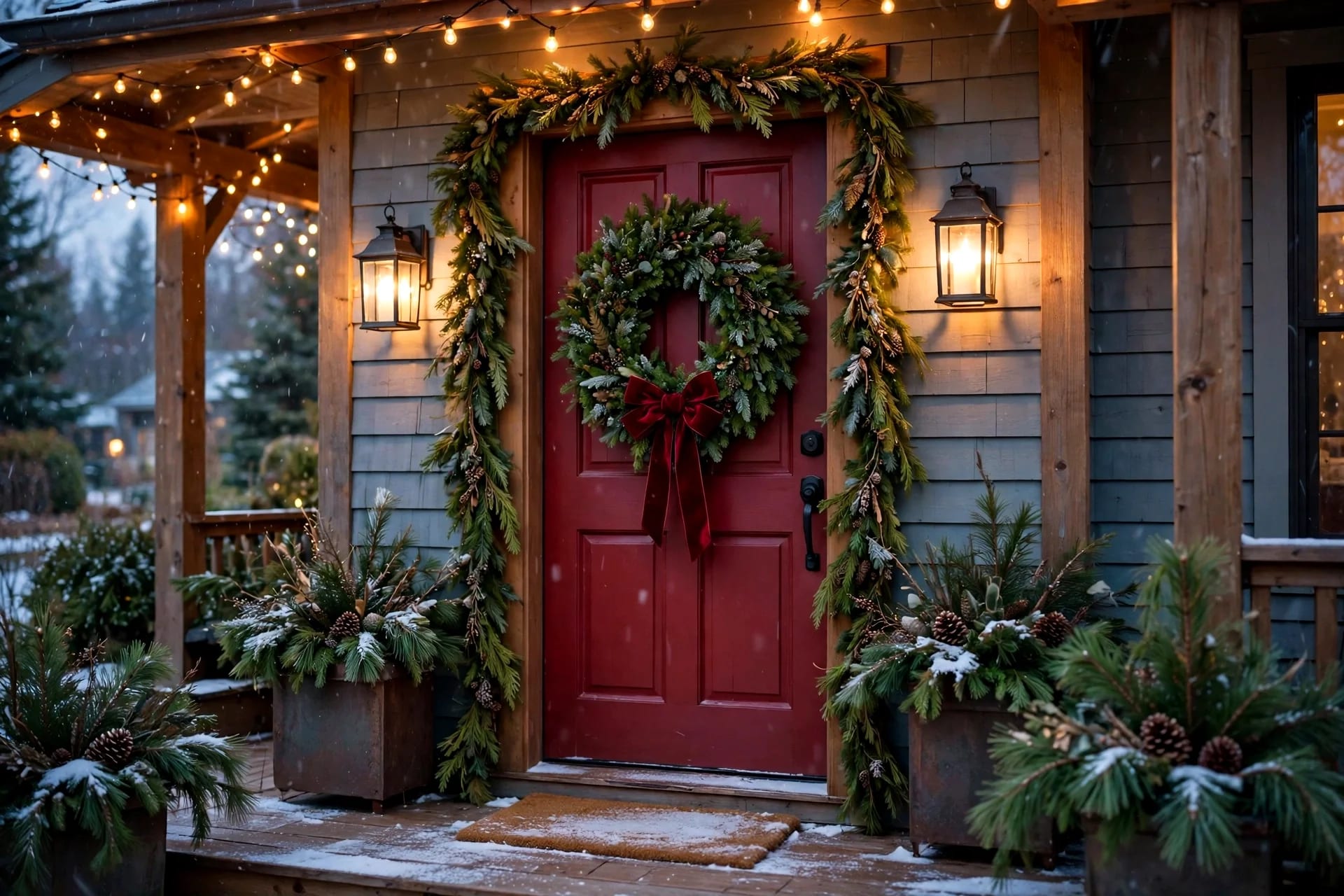
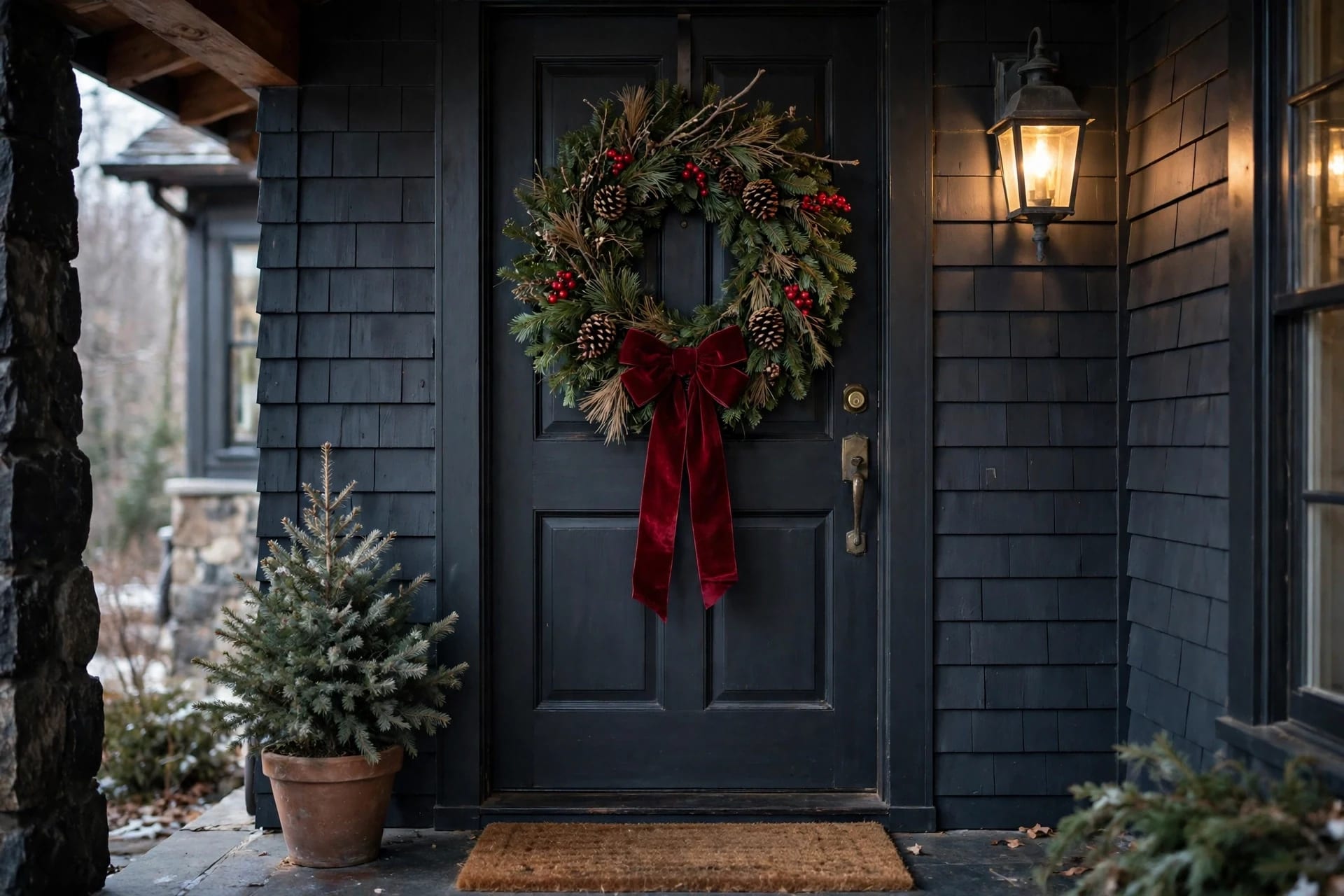
A Christmas wreath is the rare decoration that is genuinely easy to make and genuinely easy to make badly. The difference between a wreath that looks store-bought and one that looks like a craft project gone wrong comes down to three things: the size is right for the door, the greenery is cut short and bundled thick, and the base never shows through. Get those three right and the style on top — classic pine, eucalyptus, dried orange, minimalist wire — almost takes care of itself.
This guide covers the sizing and the build first, because those are the parts people get wrong, then ten wreath ideas you can actually make in an afternoon.
Key Takeaways
- Standard doors want a 24–30 inch wreath; 24 inches for apartments and narrow entries, 28–30 for standard residential doors, 36 only for double doors
- A 14-inch wire frame finishes at 22–24 inches once greenery is on — buy the frame smaller than the finished size you want
- Cut greenery into 6–8 inch pieces and wire 25–30 small bundles around the frame; long branches are what make homemade wreaths look shaggy
- Fresh wreaths last 3–6 weeks with daily misting and no direct heat; faux wreaths last years and are the right call for covered outdoor doors in wet weather
- Hang with an over-door hook or a bracket, never a nail through the door — heavy wreaths need a reinforced hook or a mount into framing
- The wreath should cover about two-thirds of the door's width, with breathing room around the edges — it is not a door cozy
Table of Contents
- Size first: the door decides
- Fresh, faux, or dried: the honest trade-offs
- The build: a first wreath step by step
- 10 DIY Christmas wreath ideas
- Hanging it without wrecking the door
- Making it last, and storing it
- FAQ
Size first: the door decides
Measure the door before buying or building anything. The rules that hold up:
- Standard single doors (30–36 inches wide): a 24–30 inch wreath. Twenty-four inches suits apartment doors and narrower entries; 28–30 inches is the sweet spot for a standard residential door.
- Double doors or oversized entries: 30–36 inches, or one wreath per door at 24 inches each.
- Windows, mirrors, and cabinet doors: 12–18 inches. Small wreaths on small surfaces; a full-size door wreath on a window looks absurd.
- Wall wreaths and mantel wreaths: 16–20 inches for the frame size, finishing larger once greenery is added.
The proportion check: the wreath should take up about two-thirds of the door's width and roughly one-third to one-half of its height, with visible door around all edges. A 36-inch wreath on a standard door — the classic beginner purchase — makes the door look swallowed. And remember the frame-to-finished gap: a 14-inch double-ring wire frame finishes at roughly 22–24 inches once greenery is wired on, so buy the frame two sizes smaller than your target finished diameter.
Fresh, faux, or dried: the honest trade-offs
Fresh greenery smells like Christmas in a way nothing else does, and it is the cheapest route if you have access to cut branches. The cost is lifespan: 3–6 weeks with daily misting, kept out of direct sun and away from heat vents and radiators. A fresh wreath on a south-facing door in a warm climate may not make it to Christmas Day. Fresh is also the highest fire risk once it dries out — never hang a dry fresh wreath near candles or fairy lights that run hot.
Faux greenery costs more upfront and lasts years with proper storage. Modern PE (polyethylene) foliage with varied tip lengths looks convincingly real from the street; cheap polyester blends with uniform tips do not, so check tip variation before buying. Faux is the right call for covered outdoor doors in wet weather, for allergy households, and for anyone who wants the same wreath next year.
Dried and preserved — dried eucalyptus, dried orange slices, cinnamon sticks, preserved moss — sits between the two: beautiful, fragrant, and season-long indoors, but fragile and weather-sensitive. A dried eucalyptus wreath must not get wet; moisture spots the leaves and shortens its life fast. One safety note: eucalyptus is unsafe for pets if chewed, so keep eucalyptus wreaths out of reach of cats and dogs that nibble plants.
For a first wreath, faux greenery on a wire frame is the forgiving choice: no wilting deadline, no sap, and you can rewire a section that looks thin without racing decay.
The build: a first wreath step by step
Cover the work surface with an old sheet — fresh greens leave sap and needles everywhere. Then:
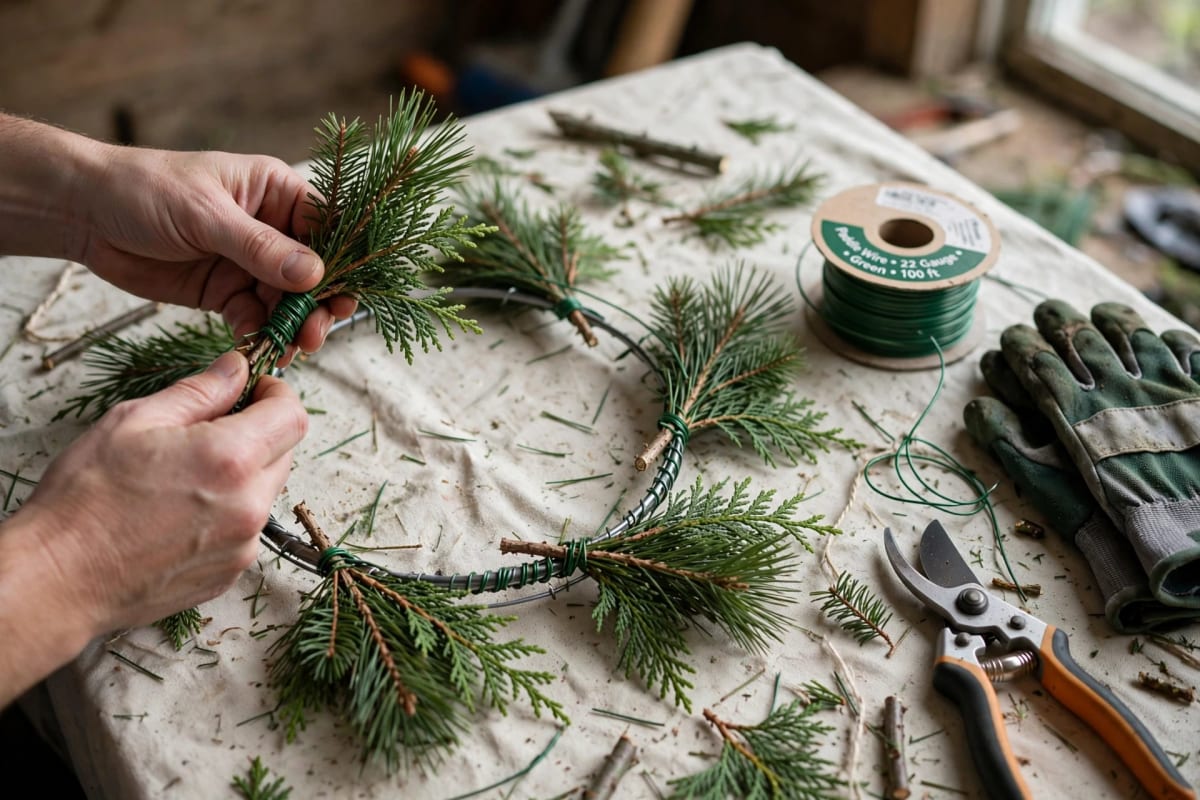
1. Gather supplies. A 14-inch double-ring wire frame, two generous armloads of greenery (enough for 25–30 small bundles), green paddle wire or floral wire in 22–24 gauge, sharp pruning shears, gardening gloves, about 3 yards of 2.5-inch wired ribbon for a bow, and accents: pinecones, berries, dried orange slices, and wired floral picks to attach them. A low-temperature glue gun helps for dried accents; a wreath hanger for the door is the last item, not the first.
2. Cut the greenery short. This is the step that separates full wreaths from shaggy ones. Cut branches into pieces 6–8 inches long, each with a bare stem of an inch or two at the bottom — strip the needles from that section so the wire grips stem, not foliage. Needles caught under wire make bundles slip. Sort pieces by type as you go; it makes balanced bundles much faster. Save the fluffiest, best-shaped tips for the top layer, and use flatter pieces as the base of each bundle.
3. Make small bundles. Gather 3–5 pieces into a bundle, mixing types — a pine base, a cedar accent, a sprig of something lighter. Wire each bundle tightly at the bare stems. Small bundles are the whole secret: one big bunch wired on in a few places looks lumpy, while many small bundles overlap into a smooth, full circle.
4. Wire bundles around the frame, overlapping. Start at one point and work around, laying each new bundle over the wired stems of the previous one so no wire or frame shows. Overlap generously — a wreath that looks full from the front but shows its skeleton from the side was under-bundled. Step back every few bundles and check the silhouette: it should read as a circle, not a lumpy ring.
5. Add accents last, sparingly. Pinecones, berries, and dried oranges go on with wired picks or a dab of low-temp glue, placed in odd numbers and spread around the circle rather than clustered in one spot. Three clusters of accents reads intentional; fifteen individual berries scattered everywhere reads fussy. The bow goes at the bottom or the top — bottom is traditional, top is modern — and wired ribbon holds its shape where plain ribbon collapses.
6. Hang and fluff. Hang the wreath at door height, step back to the street if it is an outdoor door, and fluff outward any flat spots. Greenery compresses in handling; the last five minutes of pulling tips outward is what makes it look full.
10 DIY Christmas wreath ideas
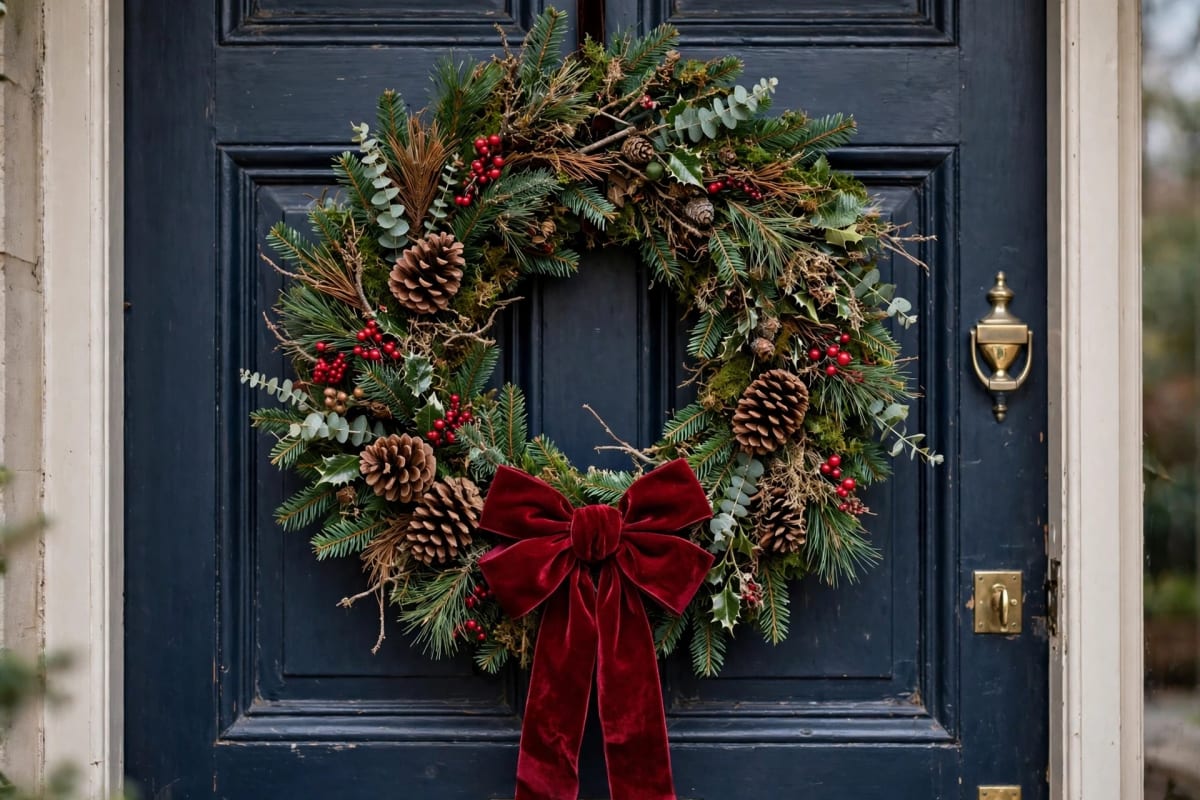
1. Classic pine and pinecone. Mixed pine, cedar, and fir bundles with natural pinecones and a deep red velvet bow. The baseline every other wreath is measured against, and still the best-looking option on most doors.
2. Eucalyptus and berry. Silver-dollar eucalyptus with faux or real red berries and a linen ribbon. Modern, light, and beautiful indoors — keep it inside or under a covered porch, and away from pets.
3. Dried orange and cinnamon. Dried orange slices, cinnamon sticks, and star anise on a pine base. Fragrant, flat enough to hang on interior doors and walls, and the slices catch window light beautifully.
4. Rustic grapevine. A grapevine base left partly visible, with dried accents, pinecones, and a plaid bow. The organic, unfinished look suits farmhouse and cabin entries; it is also the most forgiving base for beginners because gaps read as texture, not mistakes.
5. Winter white and frost. Frosted faux greenery, white berries, silver ornaments, and a white or champagne ribbon. Elegant on dark doors, where the contrast does the work.
6. Minimalist wire and sprig. A bare metal ring with a single asymmetric cluster of greenery and one ribbon. The modern answer for people who find full wreaths fussy — but the cluster has to be genuinely well-made, because there is nowhere to hide.
7. Plaid and pinecone farmhouse. Buffalo-check ribbon, burlap loops, wooden beads, and natural pinecones on mixed greenery. Warm and casual; the ribbon pattern carries the style, so keep the greenery simple.
8. Pre-lit evening wreath. Battery-operated LED fairy lights woven through faux greenery, with a timer. The wreath that looks best after dark, which is when most people actually see a front door in December. Check that the light set is rated for outdoor use if it hangs outside, and keep battery packs sheltered from rain.
9. Mantel and mirror mini wreaths. Small 12–14 inch wreaths hung on mirrors, windows, and cabinet doors throughout the house, echoing the front-door wreath in miniature. The set reads as coordinated where a single huge wreath reads as an event.
10. Foraged and free. Branches pruned from your own garden, pinecones collected outdoors, and a bow from ribbon already in the house. The cheapest wreath and often the most characterful — just check local rules before cutting from public land, and avoid protected species. Pair it with our budget Christmas decor and Dollar Tree Christmas DIY guides for the rest of the porch.
Hanging it without wrecking the door
Over-door hooks designed for wreaths are the default: no holes, adjustable, and strong enough for most wreaths. Check the hook's weight rating against a fresh wreath, which is heavier than it looks when damp. Wall-mounted brackets work for walls and siding. Adhesive hooks rated for outdoor use suit light faux wreaths on smooth surfaces.
What to avoid: nails through the door (they split veneer and leave a hole that swells in rain), suction cups on textured surfaces (they fail at the worst moment), and wire looped over the door's top hinge side (it wears the weatherstripping). Heavy wreaths — fresh greenery, pre-lit, or anything over a few pounds — want a reinforced hook or a mount screwed into framing, not into hollow door skin.
Hang the wreath so its center sits at or just above eye level on the door, roughly 57–60 inches from the ground for a standard door, and check it from the street: a wreath hung too high looks like it is escaping, and one hung too low gets knocked by every bag and elbow.
Making it last, and storing it
Fresh wreaths: mist daily, keep out of direct sun and away from radiators and heat vents, and bring them in during hard frosts if they hang outside. The moment needles drop in handfuls rather than singles, the wreath is done — compost the greenery, keep the frame and the bow.
Faux wreaths: shake out dust before hanging, spot-clean with a damp cloth, and store flat in a wreath bag or a large box with tissue between layers so branches do not crush. Label the box with the theme or color scheme — next December, you will not remember which box holds the red-velvet wreath and which holds the frosted one. Hang stored wreaths rather than stacking heavy boxes on top of them; crushed tips are the one thing that makes a faux wreath look old.
Dried wreaths: keep dry, keep indoors, and accept one season of glory. Dried orange slices darken and eucalyptus fades; that patina is part of the look, not a flaw.
For the rest of the seasonal entry, our Christmas porch decor, Christmas mantel decor, and Christmas wall decor ideas guides build out the full look, and Christmas tree alternatives covers the small-space version of the whole season.
FAQ
What size wreath should I make for a standard front door?
Twenty-four to thirty inches finished diameter. Twenty-four inches suits apartments and narrow entries; 28–30 inches is the sweet spot for a standard residential door. Remember a 14-inch wire frame finishes at about 22–24 inches once greenery is on.
How long does a fresh Christmas wreath last?
Three to six weeks with daily misting, kept out of direct sun and away from heat sources. A fresh wreath hung in hot sun or near a radiator may not last until Christmas Day.
Can I make a Christmas wreath without fresh greenery?
Yes — faux evergreens, fabric, paper, dried elements, and even recycled materials like book pages or wine corks all work. Faux is the best choice for wet outdoor spots, allergy households, and anyone who wants the wreath again next year.
How do I hang a wreath without damaging my door?
Use an over-the-door wreath hook or a wall-mounted bracket. Avoid nails through the door and suction cups on textured surfaces. Heavy wreaths need a reinforced hook or a mount into framing.
Why does my homemade wreath look thin?
Almost always one of three causes: branches cut too long (over 8 inches), bundles too big and too few (you need 25–30 small bundles), or gaps where the frame shows through. Short pieces, small bundles, and generous overlap fix all three.
Is eucalyptus safe around pets?
Eucalyptus can be unsafe for pets if chewed or eaten, so keep eucalyptus wreaths out of reach of cats, dogs, and any pet that nibbles plants. Faux eucalyptus avoids the risk entirely.