The wall above your bed is the most visible surface in your bedroom and the one most people leave bare the longest. You see it every morning and every night, guests see it from the doorway, and a blank one makes the whole room feel unfinished no matter how nice the bedding is.
The reason people stall is not lack of ideas — it is fear of getting the size wrong. A piece too small floats lost above the bed; a gallery hung too high looks disconnected; heavy frames above your head feel unsafe. This guide removes all three worries: one sizing formula, twelve looks with real costs, and the renter and safety rules that keep everything on the wall and off your pillow.
If your living room walls need the same treatment, start with our above-sofa wall decor guide — the sizing logic is the same, the room is different.
Key Takeaways
- The above-bed formula: the arrangement should span 60–80% of the bed's width, with its bottom edge 6–10 inches above the headboard (or 14–16 inches above the mattress if you have no headboard).
- Mock it first: paper templates on the wall beat measuring twice — pin up the outlines, sit with them for a day, then hang.
- One unifying color through most pieces is what makes a mixed gallery look curated instead of cluttered.
- Safety: no heavy glass frames directly above pillows — use light frames, acrylic, or canvas there, and strips rated for each frame's actual weight.
- Renters: picture ledges and adhesive strips give you the full gallery look with no holes at all.
Table of Contents
- The above-bed formula
- 12 bedroom wall decor looks
- Calm or bold: picking a mood you can sleep with
- Renters and safety
- Mistakes that make a bedroom feel off
- FAQ
The above-bed formula
Every look below follows the same three numbers, so learn them once:
Width: the arrangement — one piece or a whole gallery — should span 60–80% of the bed's width. For a queen bed (60 inches wide), that means 36–48 inches of art. For a king (76 inches), 46–61 inches. Narrower than 60% and the art floats, lost above the bed. Wider than 80% and it crowds the nightstands.
Height: the bottom edge of the arrangement sits 6–10 inches above the headboard. No headboard? Then 14–16 inches above the mattress. Higher than that and the art disconnects from the bed and drifts toward the ceiling; lower and it collides with pillows every time you sit up.
Spacing: 2–3 inches between frames in a gallery. Tighter reads as one block; wider reads as scattered. In a grid, keep the spacing identical everywhere — the eye forgives different frame sizes but not different gaps.
The mockup step everyone skips: cut paper templates the size of your frames, stick them up on the wall, and sit with the layout for a day before any nail goes in. Move them up, down, wider, narrower. This ten-minute step prevents 90% of "it looked right in the shop" regret, and it costs nothing.
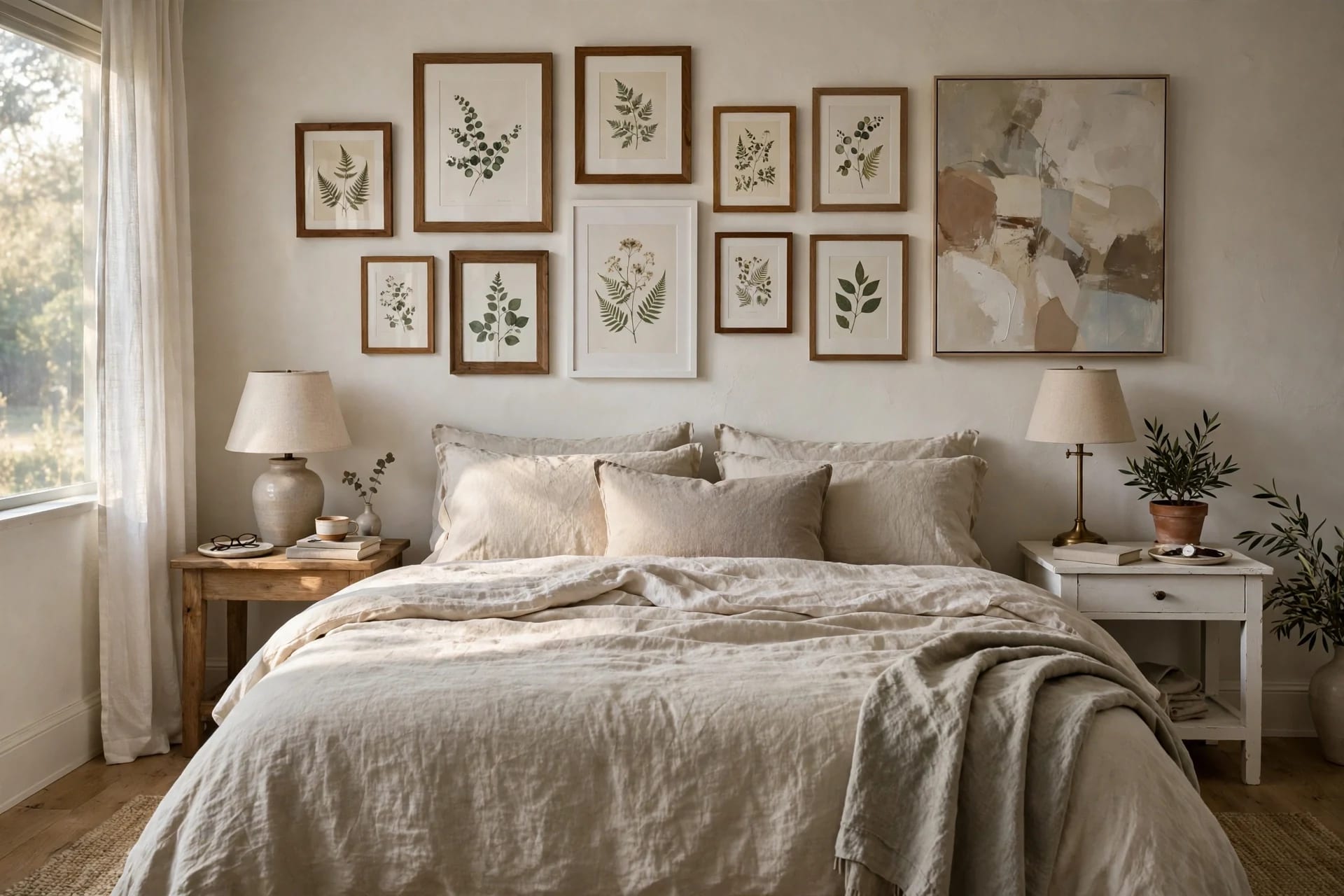
For a gallery, anchor the arrangement with one larger piece (or a calm pair) and build around it. A gallery with no anchor drifts; a gallery with one anchor looks composed even when the pieces are wildly different.
12 bedroom wall decor looks
1. One oversized canvas ($40–$120)
A single large canvas — roughly two-thirds of the bed width — is the calmest, easiest look there is. One decision, one hanging point, no gallery math. Abstract landscapes and soft botanicals work best for sleep; busy graphic prints belong in the living room. Thrifted canvas + a $15 print, or a ready-made canvas set from a big-box store, both work.

2. The triptych ($30–$80)
Three matching panels in a row, spaced 2–3 inches apart, spanning 60–80% of the bed width. Triptychs are the cheat code for a gallery look without gallery decisions: the set is designed to hang together, so spacing and color are already solved. Botanical prints, landscapes, and abstract sets all work.
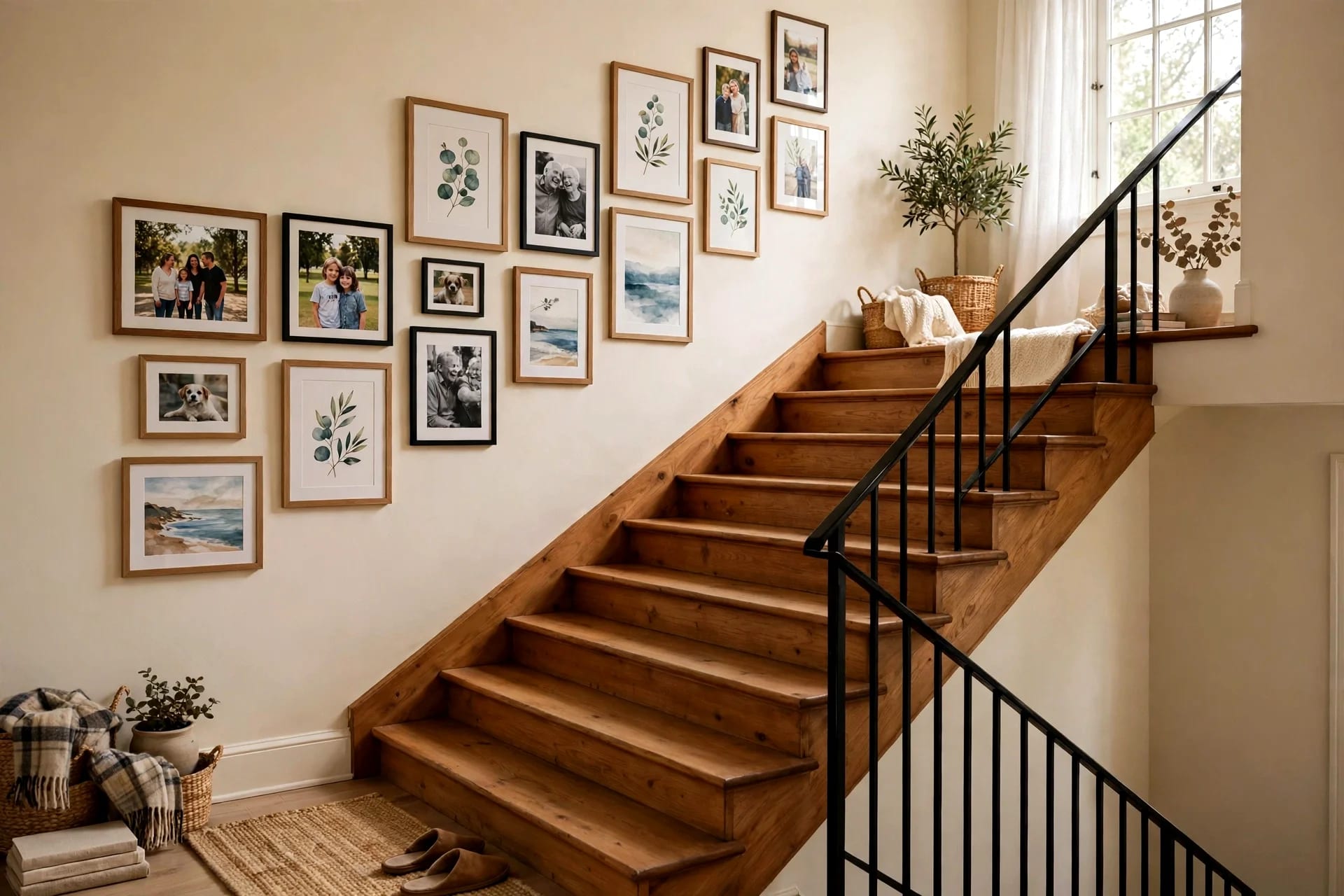
3. The salon gallery ($30–$250)
A mixed collection — framed prints, one canvas, a photo or two, maybe a small textile — arranged salon-style around one anchor piece. The rule that keeps it curated: one unifying thread through most pieces, usually one frame color or one color that appears in every piece. Cost varies with how much you already own; printable art keeps it under $50.
4. Picture ledges ($25–$60)
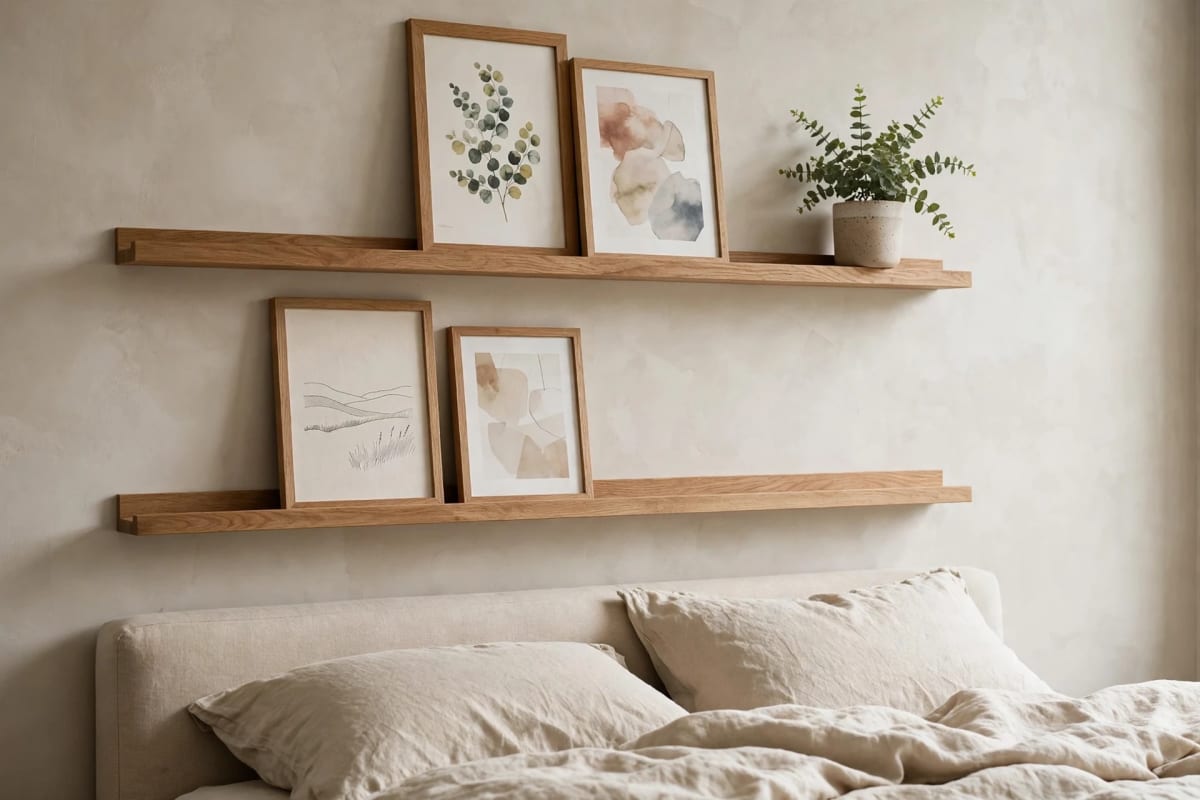
Two slim ledges above the bed with art leaned on them, layered and overlapping. This is the easiest gallery to live with, because you can shuffle, swap, and seasonally rotate pieces without making a single new hole. Use ledges with a lip so nothing slides off in the night, and keep the heaviest frames on the lower ledge.
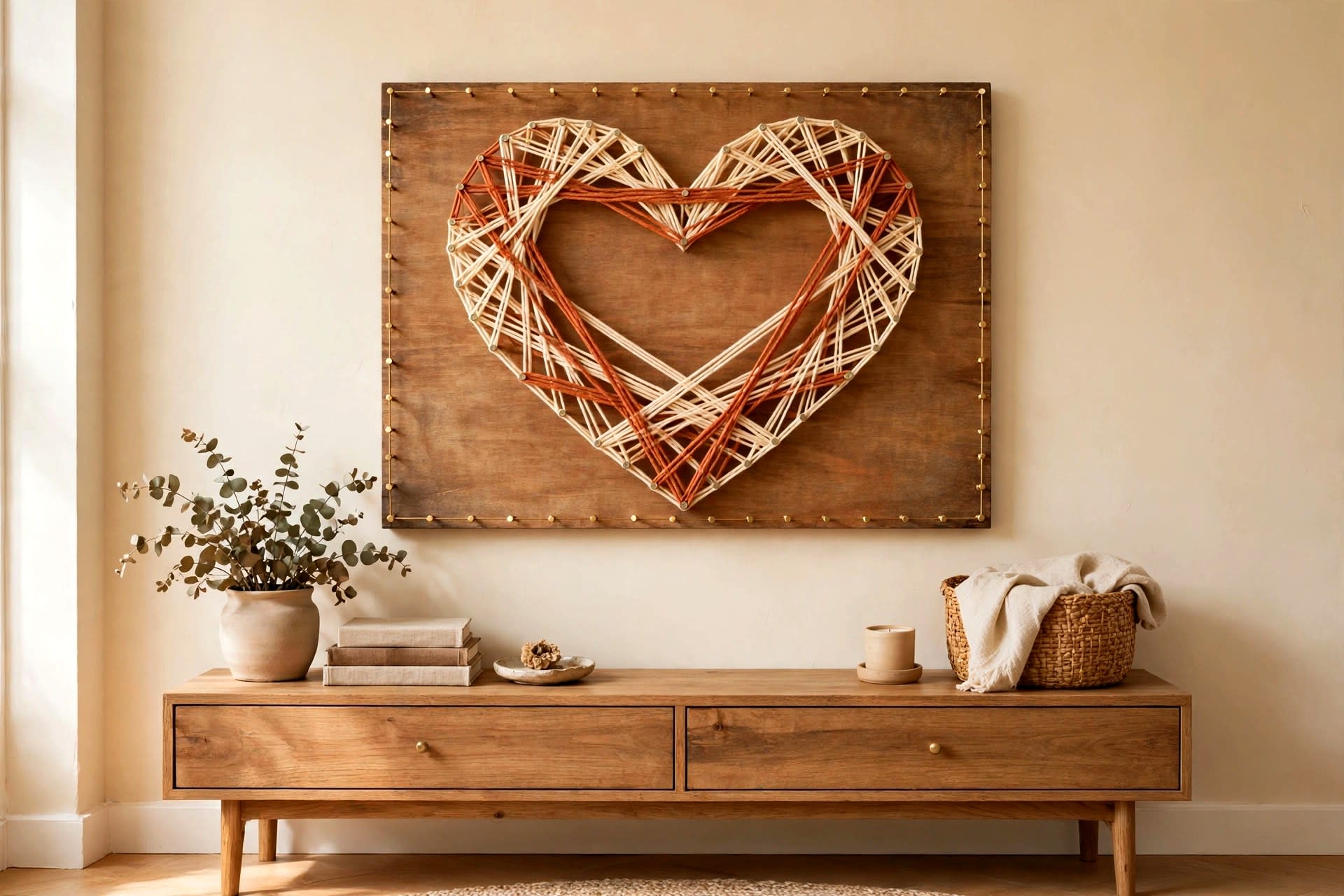
5. Macrame or textile hanging ($20–$70)
One large macrame piece or woven tapestry above the bed brings texture that framed prints can't. It is also the safest thing to hang above pillows — soft, light, and silent if it ever falls. Pair with beige walls, a light wood headboard, and plain bedding so the texture is the star.
6. Wood slat accent wall ($80–$200)
Vertical wood slats across the bed wall, doubling as a headboard. This is the biggest commitment on the list and the highest impact: the wall itself becomes the decor, and you need almost nothing else on it. In a small bedroom, floating the slats with a gap behind them and adding a sconce keeps the room feeling airy rather than boxed in.
7. A large mirror ($50–$150)
A round or arched mirror above the bed bounces light and doubles the sense of space — the same trick our mirror wall decor guide uses in living rooms. Keep it light (a heavy mirror above pillows is the one thing to avoid) and hang it with proper anchors, not strips.
8. Floating shelves with art and plants ($30–$90)
One or two floating shelves above the bed holding leaning art, a small plant, and a vase. The shelf does the hanging work, so the art itself needs no nails at all. Keep the shelf above the 14–16 inch line and don't overload it — three objects per shelf is plenty.
9. A painted arch ($15–$40)
Paint an arch on the wall where a headboard would be, in a color pulled from your bedding. This is the best look for renters who can paint (or for anyone on a budget): one can of paint, one afternoon, and the bed wall looks designed. Our painted arch accent wall guide covers the technique step by step.
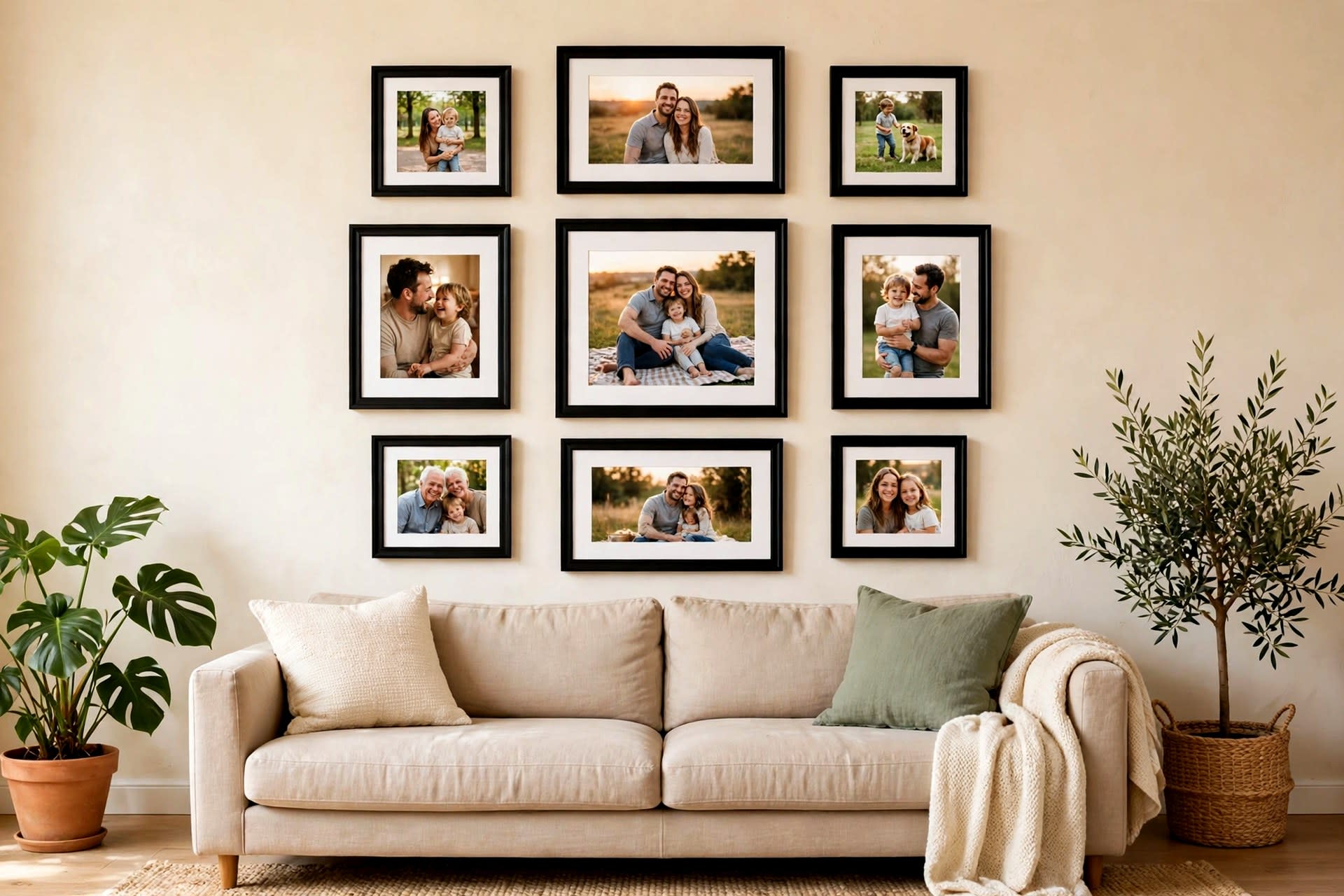
10. The photo grid ($25–$60)
A 2×2 or 3×2 grid of identical frames with identical mats — family photos, travel shots, or black-and-white prints. The grid's power is its discipline: same frame, same mat, same gaps, and even casual snapshots look like a gallery. Map the outer edges to the nightstands so the grid ties into the furniture line.
11. Sculptural or metal art ($40–$120)
A brass, wood, or woven sculptural piece above the bed adds dimension that flat prints can't. One piece is enough — sculpture competes with itself if you hang two. Keep it light and hang it with a proper anchor; sculpture above pillows follows the same safety rule as mirrors.
12. The personal collage ($10–$40)
Postcards, a child's drawing, a concert ticket, a market print — the things that actually mean something to you, framed simply and hung as a loose collage. One color through most pieces keeps it from looking like a noticeboard. This is the look people compliment most, because no two versions of it can ever match.
Calm or bold: picking a mood you can sleep with
Bedroom art has a job that living room art doesn't: it has to let you sleep. That doesn't mean boring — it means choosing where the energy goes.
Calm layouts favor even spacing, soft edges, and fewer colors: tone-on-tone abstracts, neutral botanicals, misty landscapes, one large piece or a tidy grid in white or wood frames. If you want the room to feel like a hotel suite, this is the lane.
Bold layouts bring contrast and scale: graphic black-and-white, color blocking, expressive brushwork, one large canvas with throw pillows echoing its accent colors. Bold works in a bedroom when the bedding stays quiet — the wall carries the color, the bed carries the calm. Bold walls plus bold bedding is where bedrooms start to feel loud.
The sleep test: if you lie in bed and your eyes keep catching on the art instead of resting, the art is too busy for the room. Swap one loud piece for a quiet one and the whole wall calms down. You don't need to start over — one swap usually does it.
Small bedrooms want one horizontal piece or a narrow panoramic: it stretches the wall and keeps the design airy. Light palettes help more than dark ones here, and a mirror (look 7) does double duty as space-maker.
Renters and safety
No holes, full gallery: picture ledges need two screws per ledge, but adhesive strips need none. Strips rated for each frame's actual weight — check the rating, don't guess — hold light and medium frames perfectly. For anything over a few pounds, use two sets of strips per frame. Test one strip on a hidden patch of wall first, and warm old strips with a hairdryer before peeling so the paint stays put.
The headboard-wall safety rule: nothing heavy and glass directly above where your head lies. A falling frame at 3 a.m. is the nightmare scenario, and it is entirely avoidable: canvas, textile, acrylic, and light wood frames above pillows; heavy glass and mirrors only where they can't fall on anyone, or anchored into studs properly.
Paper templates first: this matters even more for renters, because every avoided hole is deposit money. Tape the outlines, adjust for a day, then commit to the minimum number of fixings.
When you move out: strips peel clean, ledges leave two small holes per ledge (a dab of filler each), and a painted arch needs one coat of the original wall color. Budget an hour for the whole reversal.
Our renter-friendly wall decor guide ranks every no-damage method by weight limit, and the gallery wall layouts guide covers the spacing math for bigger walls.
Mistakes that make a bedroom feel off
- Too small above the bed. A single 12-inch print above a queen bed looks like an afterthought. Span 60–80% of the bed width, always.
- Hung too high. Art that floats near the ceiling disconnects from the bed. Bottom edge 6–10 inches above the headboard, 14–16 above the mattress without one.
- Heavy glass above pillows. The one safety mistake. Canvas, textile, or acrylic above your head; heavy frames elsewhere.
- A matching set that looks like a hotel. Identical everything with no personal piece reads as a showroom. Add one thing that is only yours — a photo, a postcard, a market find.
- Cluttered salon with no thread. A gallery with five frame colors and no repeated color looks accidental. One frame color or one repeated color fixes it.
- Ignoring the nightstands. A gallery that ignores the furniture line floats. Align the outer edges of the arrangement with the nightstands (or just inside them) and the whole wall ties together.
FAQ
How big should wall decor above a bed be?
The arrangement should span 60–80% of the bed's width — 36–48 inches for a queen bed, 46–61 inches for a king. Smaller looks lost; wider crowds the nightstands. For a single piece, aim for roughly two-thirds of the bed width.
How high do you hang art above a bed?
The bottom edge should sit 6–10 inches above the headboard, or 14–16 inches above the mattress if you have no headboard. Higher disconnects the art from the bed; lower and it collides with pillows when you sit up.
What is the safest wall decor above a bed?
Light, soft things: canvas prints, macrame and textile hangings, acrylic prints, and light wood frames. Avoid heavy glass frames directly above pillows — if one falls at night, it falls on you. Heavy mirrors and sculpture need proper wall anchors, not adhesive strips.
Can renters decorate the wall above a bed without drilling?
Yes. Adhesive strips rated for each frame's weight hold light and medium frames, and picture ledges need only two screws each while letting you swap art freely. A painted arch is also renter-friendly if your lease allows painting — one coat of the original color reverses it.
How do I arrange a gallery wall above the bed without it looking cluttered?
Start with one anchor piece, keep one unifying thread (one frame color or one color repeated in most pieces), keep spacing even at 2–3 inches, and map the outer edges to the nightstands. Lay the frames on the floor and sketch the layout before you drill anything.
Should bedroom wall decor match the bedding?
Echo it, don't match it exactly. Pull one or two colors from the bedding into the art, and keep the bedding itself quieter than the wall — or the reverse. When wall and bedding compete at full volume, the room feels loud instead of restful.