The entryway wall is the first thing guests see and the wall most people decorate last, usually with whatever was left over. That is why so many of them look slightly off: a mirror wider than the table beneath it, a tiny frame floating alone on a big wall, a console so deep it turns the hallway into a squeeze. The entryway is not a hard wall to decorate. It runs on a handful of proportion rules, and once those are set, almost any style works on top of them.
Start with the furniture, not the decor. The console table sets every other measurement on the wall: the mirror width, the hanging height, even how much of the wall the arrangement should cover.
Key Takeaways
- Mirror width: two-thirds to three-quarters of the console's width, never wider than the console itself
- Hang the mirror's bottom edge 6–8 inches above the console surface so the two read as one unit, not two strangers
- Mirror center at 57–60 inches from the floor when the mirror is meant to be used, not just looked at
- Console depth: 12–16 inches for hallways; anything deeper eats the walkway, which needs at least 36 inches clear
- Wall coverage: 30–40% maximum — the arrangement should anchor the wall, not fill it edge to edge
- One anchor piece beats five small ones on a narrow wall; build outward from a single mirror or large frame
Table of Contents
- The console sets every measurement
- Mirror size and height, settled
- 10 entryway wall decor formulas
- Narrow hallways and tight entries
- Rental-friendly entryway walls
- Styling the console top
- What not to do
- FAQ
The console sets every measurement
A console table is a narrow, tall table built for exactly this job: a landing spot for keys, mail, and a bag, against a wall, without blocking the path. Standard console height runs 30–32 inches (75–85 cm), and depth should stay between 12 and 16 inches (30–40 cm) in a hallway. Go deeper and the table starts stealing walkway space; the hallway needs at least 36 inches (90 cm) clear for comfortable passing, so measure the hallway first and subtract the console depth before buying.
Width is flexible — anywhere from 36 inches for a tight hall to 60 inches for a proper foyer — but whatever you choose, it becomes the ruler for the wall above it. A 48-inch console wants a mirror roughly 32–36 inches wide. A 60-inch console wants 40–45 inches. Buy the console first, then size the wall decor to it, not the other way around. People who buy the mirror first almost always end up with a mismatch in one direction or the other.
If there is no room for a console at all — a hallway under 40 inches wide, say — skip it. A wall-mounted shelf at console height, a row of hooks, or a slim picture ledge does the same job without stealing floor space. Our damage-free wall decor guide covers the no-drill versions of all of these.
Mirror size and height, settled
Mirror advice online contradicts itself because two different methods both work, and people mix them. Here are both, cleanly separated:
Method 1: eye-level centering (most practical). Center the mirror at 57–60 inches from the floor, roughly average adult eye level. This is the method to use when the mirror is actually used — the last check of face and hair on the way out. It works best with taller mirrors.
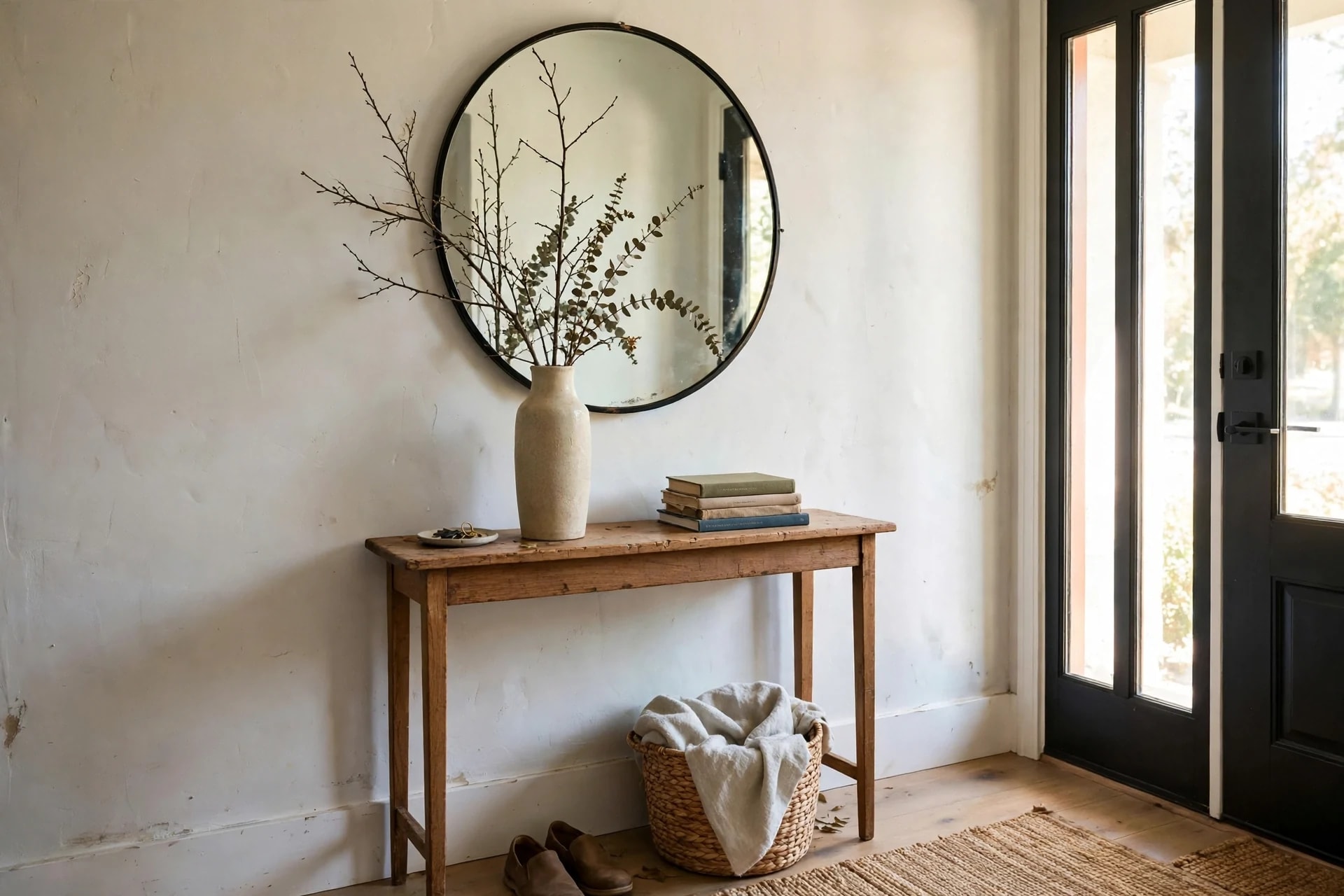
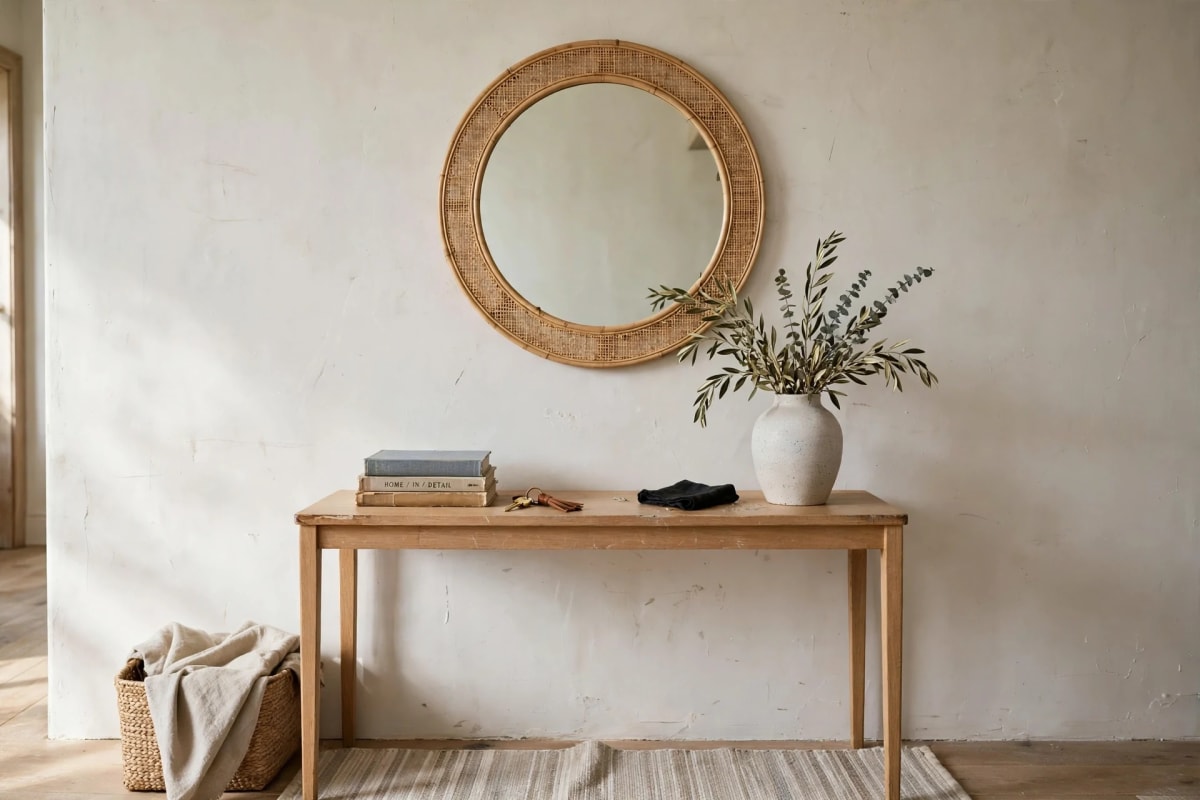
Method 2: console-connected placement (most common for styling). Hang the mirror so its bottom edge sits 6–8 inches above the console surface (6–12 inches is the forgiving range). This keeps the mirror visually tied to the furniture, leaves room for a vase or lamp on the table without blocking the glass, and makes the whole arrangement read as one composition.
What does not work is splitting the difference without intention — a mirror floating 18 inches above the console and centered at no particular height looks like it drifted there. Pick one method. If the mirror is very tall, the 6–8 inch gap takes precedence over the eye-level center, because forcing the center to 57 inches would push the bottom edge onto the tabletop.
Width follows the proportion rule: two-thirds to three-quarters of the console's width, never wider than the console. A mirror wider than its console looks top-heavy and unstable, even when it is bolted to studs. Shape changes the mood — round softens a boxy hall, arched adds height, rectangular reads formal — but proportion controls whether any of them work.
One placement note worth knowing: avoid hanging a mirror directly opposite the front door if you follow feng shui principles, which hold that it bounces energy straight back out. A perpendicular wall that catches natural light without facing the exit is the preferred spot, and it has the practical benefit of reflecting daylight deeper into the hall.
10 entryway wall decor formulas
These are starting points, not prescriptions — pick the one that matches your wall width, then adjust.
1. The single mirror. One large mirror, two-thirds the console width, 6–8 inches above it. The safest formula in existence, and the right call for narrow halls where anything more becomes visual noise.
2. Mirror flanked by sconces. A mirror with a slim sconce on each side adds symmetry and evening light. Keep sconces slim — chunky fixtures on a narrow wall crowd the mirror. Battery-operated sconces with adhesive mounts make this renter-safe.
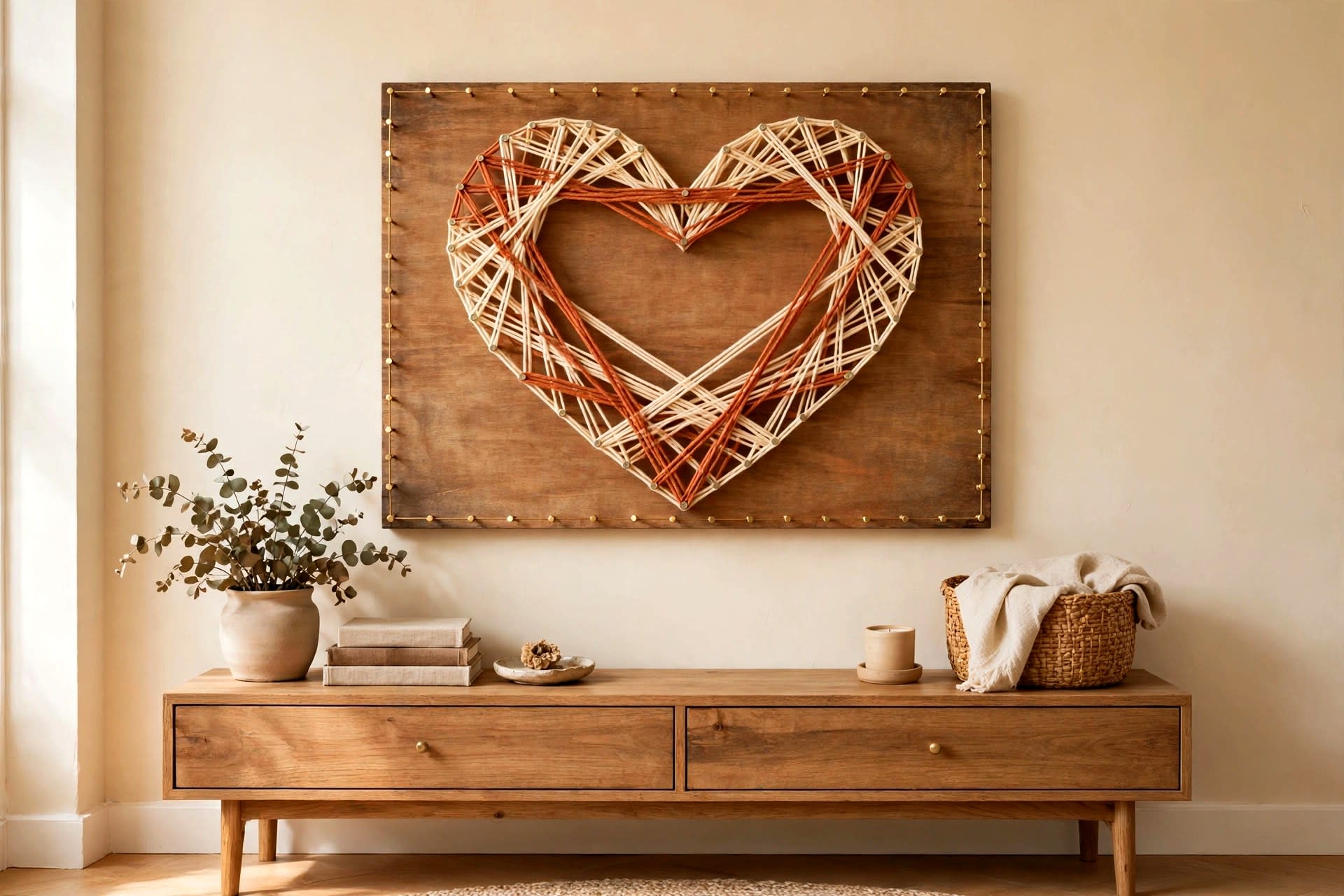
3. The centered artwork. One large quiet artwork — a tonal abstract, an oversized photograph with plenty of negative space — over a slim console with a single sculptural vase. Gallery-calm, and it works beautifully in minimalist homes where the entry sets the tone for everything else.
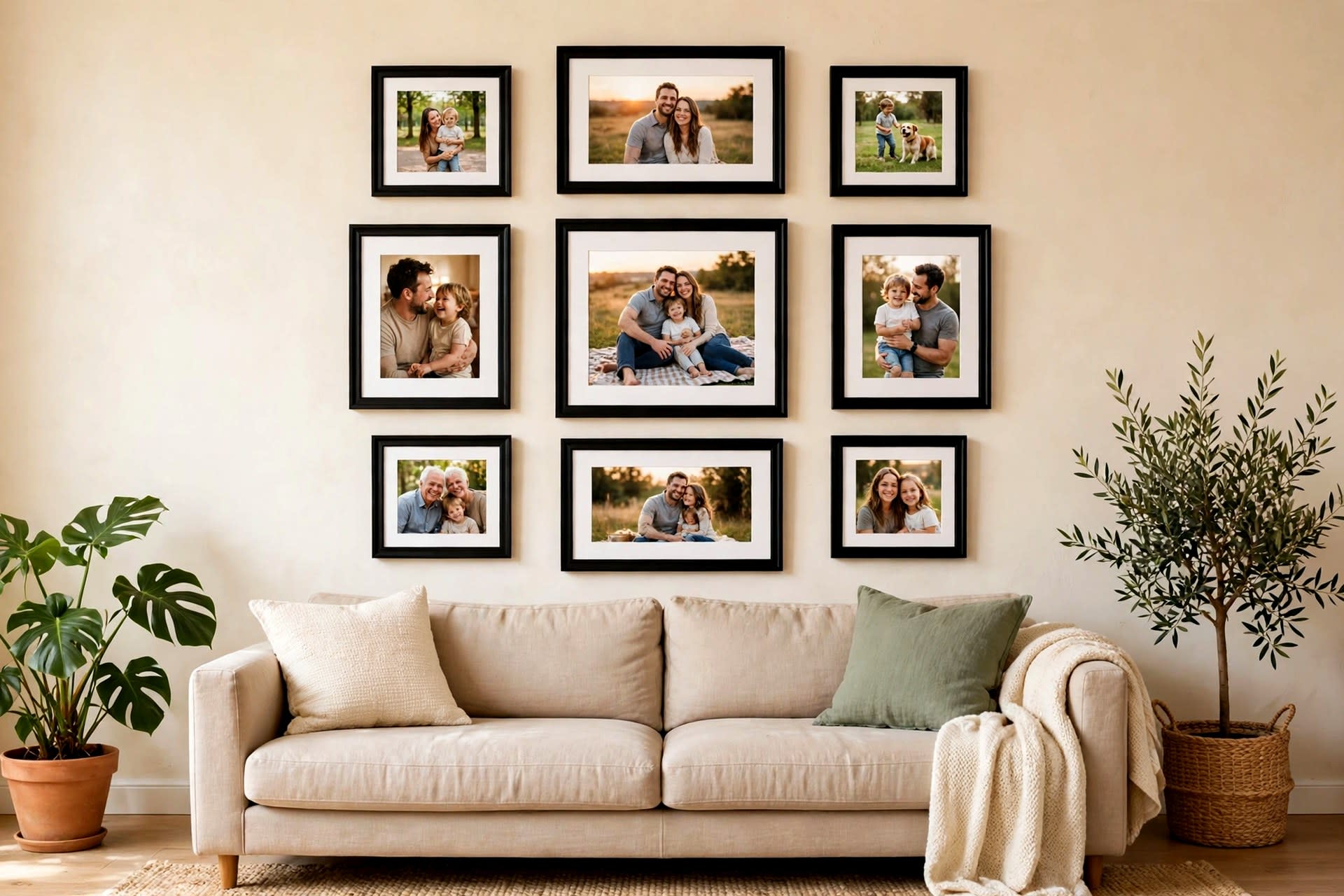
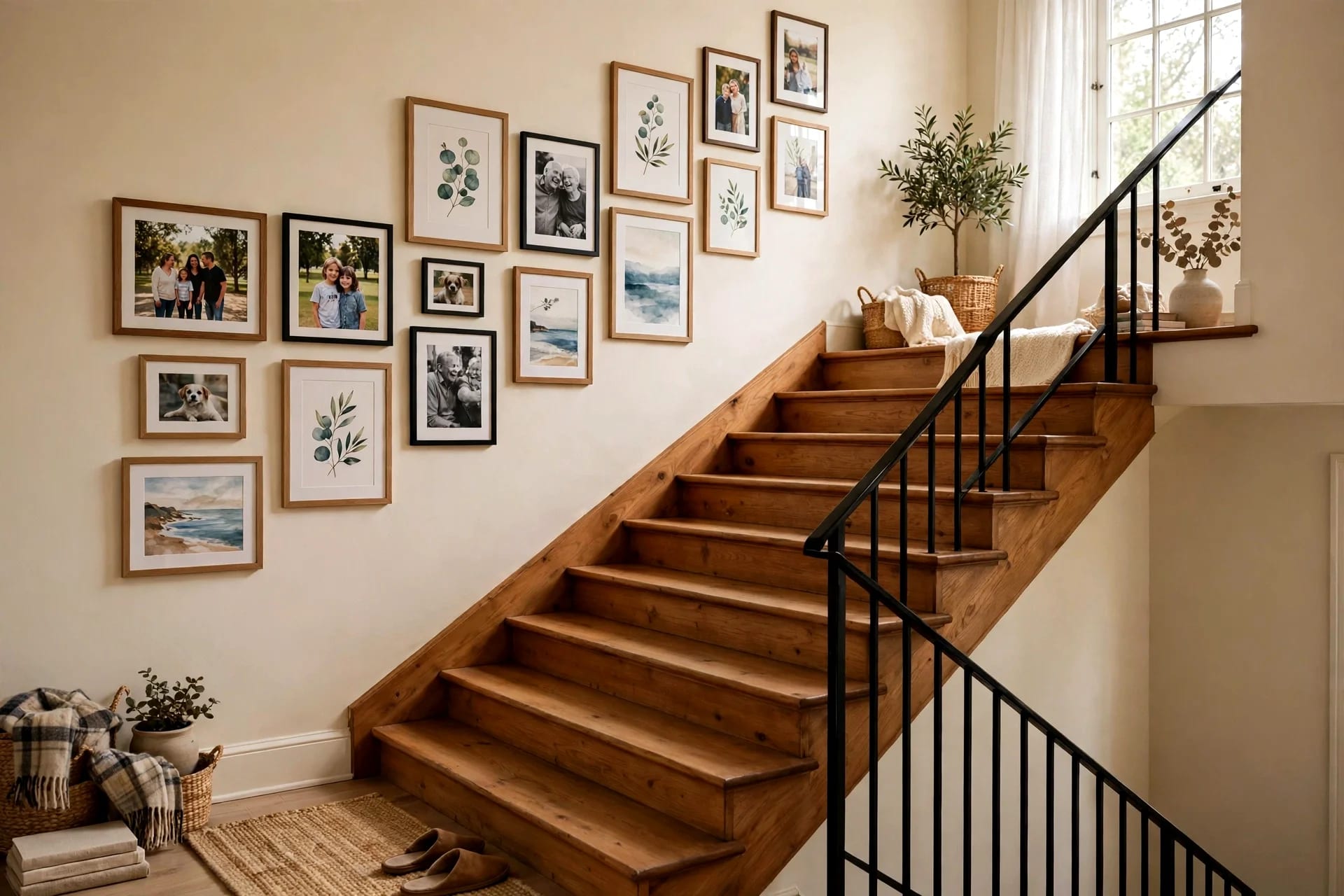
4. The anchor gallery. A gallery wall with one clear anchor piece in the middle and consistent spacing around it. The anchor stops the gallery from reading as random frames; without it, small galleries on entry walls tend to look like clutter. Our gallery wall layouts guide covers spacing math, and small gallery wall ideas adapts it for tight walls.
5. The picture ledge. A slim ledge at eye level holding leaning frames you can swap seasonally. Perfect for people who rearrange often, and ideal for renters since one ledge means two screw holes instead of twenty. Layer a tall frame behind a short one for depth.
6. The asymmetric offset. Artwork hung off-center, balanced by a tall lamp or a branch arrangement on the opposite side of the console. This is the formula for people who find symmetry boring — but the balance has to be real. A tall object on one side must genuinely counterweight the art on the other, or the wall tips visually.
7. The full-height statement. One oversized piece — a tall arched mirror, a floor-leaning mirror, or a large canvas — that runs most of the wall height. Works in foyers with 9-foot-plus ceilings; in standard 8-foot halls it can overwhelm, so keep the console underneath minimal.
8. The functional wall. Hooks, a small shelf, a key dish, and one framed print — decoration that earns its keep. The best formula for family entries where bags, coats, and keys are the real decor whether you plan for them or not. Give everything a designated spot and the wall stays intentional instead of chaotic.
9. The board-and-batten entry. Painted battens on the lower wall with hooks and a mirror above turn a plain entry into architecture. It reads as built-in, protects the wall behind coats and bags, and costs far less than it looks. Our board-and-batten wall guide covers the install.
10. The seasonal swap. A neutral base — mirror, console, one vase — with one seasonal element that changes: greenery in spring, dried stems in autumn, a wreath in December. The entry always looks current without redecorating, and it is the lowest-effort way to keep the first impression fresh.
Narrow hallways and tight entries
Narrow halls punish every oversized choice, so the rules tighten:
- Depth first. A 12-inch-deep console is the maximum in a hallway under 48 inches wide. Under 40 inches, skip the console for a wall shelf.
- One anchor only. A single mirror or one large frame. Gallery walls in narrow halls need generous spacing to avoid a tunnel-of-frames effect, and most narrow halls cannot afford it.
- Light colors and reflective surfaces. A mirror opposite a light source doubles the daylight in the hall. Pale walls, a light console, and one reflective piece beat dark wood and heavy frames every time in a tight space.
- Vertical emphasis. Tall, narrow mirrors and vertical art draw the eye up and make low ceilings feel less pressing. Horizontal arrangements widen a wall that does not need widening.
If the entry is a corner rather than a wall — common in apartments where the front door opens straight into the living room — a console floated against the nearest wall, with the mirror above it, still creates an "entry" psychologically even without an actual hallway. The small living room layouts guide shows how that zone works inside open plans.
Rental-friendly entryway walls
Renters can do nearly all of this without losing a deposit. The renter friendly wall decor guide covers the full system, but the entryway shortcuts are:
- Lean, don't hang. A large mirror or frame leaned against the wall on top of the console needs no holes at all. Secure the top with a small adhesive bumper so it cannot slide.
- Picture ledges over nail grids. One ledge, two screws into studs (or heavy-duty adhesive strips rated for the weight), holds a rotating cast of frames.
- Adhesive hooks for wreaths and light frames, rated honestly — check the weight rating and the wall surface, because textured walls defeat most strips.
- Peel-and-stick moulding frames on the wall itself: applied rectangles of trim that read as paneling from the doorway and peel off cleanly. Our picture frame moulding guide covers the permanent version; the peel-and-stick variant follows the same proportions.
Styling the console top
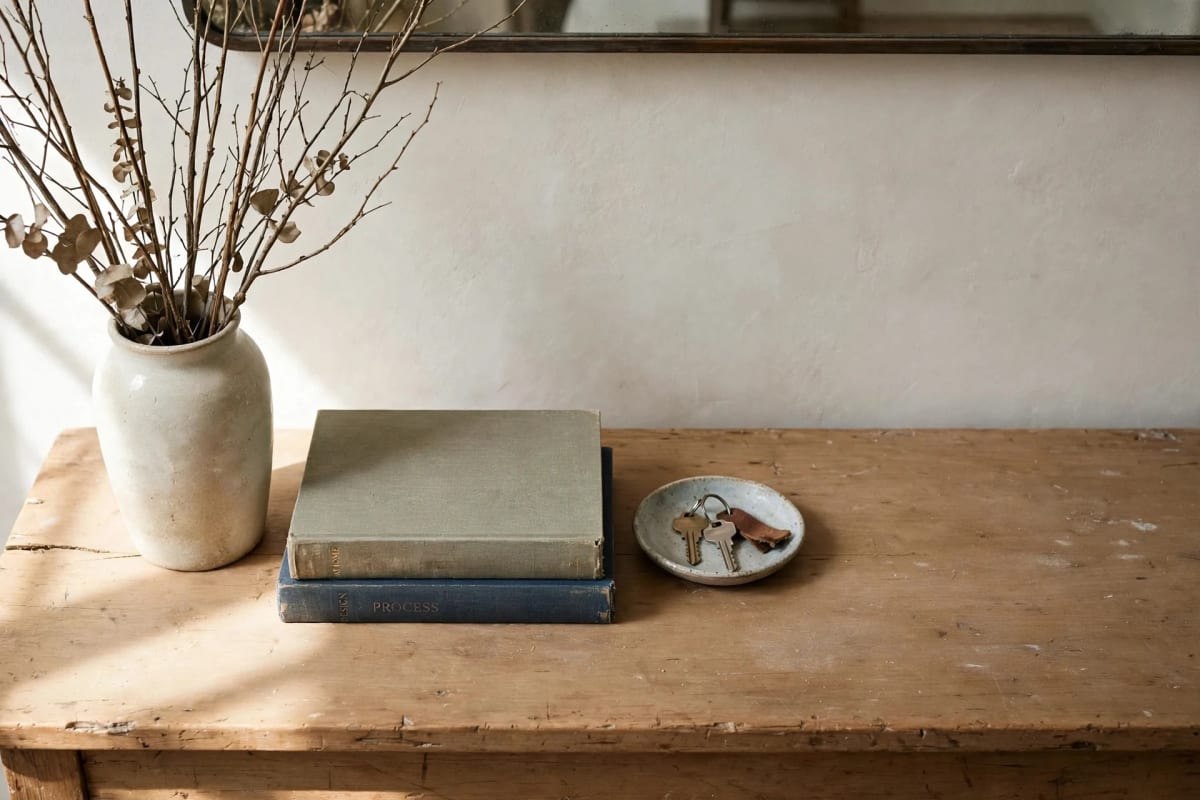
The console top is where entries go wrong after the wall is right. The formula that works: one tall thing, one medium thing, one small thing, and empty space. A tall vase with branches, a medium frame or stack of two books, and a small dish for keys — then stop. Every additional object subtracts from the arrangement instead of adding to it.
Group in odd numbers, vary heights by at least a few inches between objects, and keep the center clear if the mirror hangs low — a tall object directly under the mirror's bottom edge crowds the glass. Leave one stretch of bare tabletop visible; it is what makes the styled parts look styled rather than stored.
Seasonal swaps live here too: the vase gets fresh greenery in spring, dried stems in autumn, and nothing at all in the weeks when life is busy. An empty vase is better than a dusty arrangement nobody likes anymore.
What not to do
- A mirror wider than the console. Top-heavy, unstable-looking, and the first thing a visitor's eye catches for the wrong reason.
- Art hung at "standing eye level" above a console. The console changes the reference point — 6–8 inches above the tabletop is the rule here, not 57 inches to center regardless of furniture.
- A console deeper than 16 inches in a hallway. It turns the entry into a squeeze and guarantees bruised hips.
- Covering more than 40% of the wall. The arrangement should anchor the wall, not wallpaper it. Bare wall around the composition is what makes it read as intentional.
- Five small frames where one large piece belongs. Small pieces on a big entry wall look lost; small pieces in a narrow hall look cluttered. Either way, one anchor piece fixes it.
FAQ
How big should a mirror be over a console table?
Two-thirds to three-quarters of the console's width. For a 48-inch console, that is 32–36 inches; for a 60-inch console, 40–45 inches. Never wider than the console itself.
How high should I hang a mirror over a console table?
Either center it at 57–60 inches from the floor (best when the mirror is actually used), or hang its bottom edge 6–8 inches above the console surface (best for styling). If the mirror is very tall, the gap above the table takes precedence.
What depth console table works in a narrow hallway?
Twelve to sixteen inches. In a hallway under 40 inches wide, skip the console and use a wall-mounted shelf or picture ledge instead, keeping at least 36 inches of walkway clear.
Can I do entryway wall decor in a rental without drilling?
Yes — lean large mirrors and frames on the console, use one picture ledge instead of many nail holes, and use weight-rated adhesive hooks and strips on smooth walls. Check weight ratings honestly; textured walls defeat most adhesive strips.
What should I put on top of a console table?
One tall thing, one medium thing, one small thing, and empty space: for example, a tall vase with branches, a stack of two books, and a small dish for keys. Stop there — every extra object subtracts from the arrangement.
Should a mirror face the front door?
Feng shui principles advise against it, recommending a perpendicular wall instead. Practically, a perpendicular wall also catches natural light better and avoids the startling effect of seeing yourself the moment the door opens.