Renting doesn't mean living with blank walls. Every DIY wall decor project on this site can be adapted for rentals — the trick is knowing which damage-free hanging method to use, and the prep step that makes adhesive strips actually hold (most failures are skipped prep, not bad products). Here are 9 renter-friendly DIY wall decor ideas, the methods ranked by reliability, and how to remove everything cleanly at move-out.
For the full project tutorials, see our DIY wall decor hub.
Key Takeaways
- 9 ideas, zero holes: macramé, plaster canvases, taped galleries, fabric hangings, pressed flowers, leaning art, washi borders, photo displays, decals
- Methods ranked: adhesive strips (best for frames) → hooks → washi tape → leaning → tension rods
- The prep rule: alcohol wipe + 30-second press + 1-hour wait = strips that hold for years
- Weight limits are real: respect them — 7 kg per large strip set, less on textured walls
- Move-out: heat + slow pull at 180° removes strips without paint damage
In this guide:
- Damage-free hanging methods, ranked
- The adhesive prep that makes strips hold
- What landlords actually check at move-out
- 9 renter-friendly DIY ideas
- Move-out: clean removal
- 5 renter decor mistakes
- The takeaway
- Frequently asked questions
Damage-free hanging methods, ranked
- Adhesive picture-hanging strips. The gold standard for frames up to 7 kg. Two interlocking strips — one on the wall, one on the frame — that separate with a pull tab. Invisible, strong, removable. Use two sets (4 strips) for anything over 2 kg so it can't rotate.
- Adhesive hooks. For macramé dowels, fabric hangings, lightweight mirrors. Same prep rules as strips. The hook format handles hanging (not flat-mounting) better than strips.
- Washi/painter's tape. For paper art, photos, and tape-frame galleries. Zero residue by design. Not for anything heavy — paper only.
- Leaning. Large frames and mirrors leaned against the wall need no adhesive at all. Secure the bottom with a discreet adhesive bumper so it can't slide. The most foolproof method that exists.
- Tension rods. Inside window frames or alcoves for curtains and lightweight hangings. No wall contact beyond pressure — but check they can't slip and damage trim.
What about push pins? They leave tiny holes — most landlords accept them as "normal wear," but "most" isn't "all." If your lease says no holes, pins are holes. When in doubt, strips.
The adhesive prep that makes strips hold
The horror stories about strips falling at 3 AM are 90% skipped prep:
- Clean the wall spot with rubbing alcohol on a cotton pad. Not water, not cleaner — alcohol. It removes the invisible film of dust and oils that prevents bonding.
- Wait 60 seconds for the alcohol to evaporate fully.
- Press the strip firmly for 30 seconds — real pressure, not a tap.
- Wait 1 hour before hanging anything on it. The adhesive needs time to build bond strength.
On textured or matte-finish walls, adhesion is weaker — use one size up from what the weight suggests, and test with the actual frame for 24 hours before committing to a full gallery wall.
What landlords actually check at move-out
Knowing the inspection criteria removes the anxiety. Here's what most landlords and property managers actually look at:
- Nail holes: the classic deduction. Even small holes "count" in strict inspections — this is the entire reason for this guide.
- Paint condition: scuffs and marks beyond "normal wear." Adhesive residue, tape ghosts, and decal outlines all read as damage.
- Wall texture: torn drywall paper from rushed strip removal is worse than a nail hole — it's harder to fix invisibly.
- What they DON'T check: what's ON the walls while you live there. Leaned art, tapestries, and strip-hung galleries are all invisible at inspection if removed properly.
The move-in photo habit: photograph every wall on day one, close-ups of any existing marks. This is your baseline — without it, you can't dispute pre-existing damage. Email the photos to yourself so they're timestamped.
Ask upfront: "What's your policy on small nail holes / adhesive strips?" Some landlords explicitly allow them; knowing beats guessing. Get the answer in writing (even a text message counts).

9 renter-friendly DIY ideas
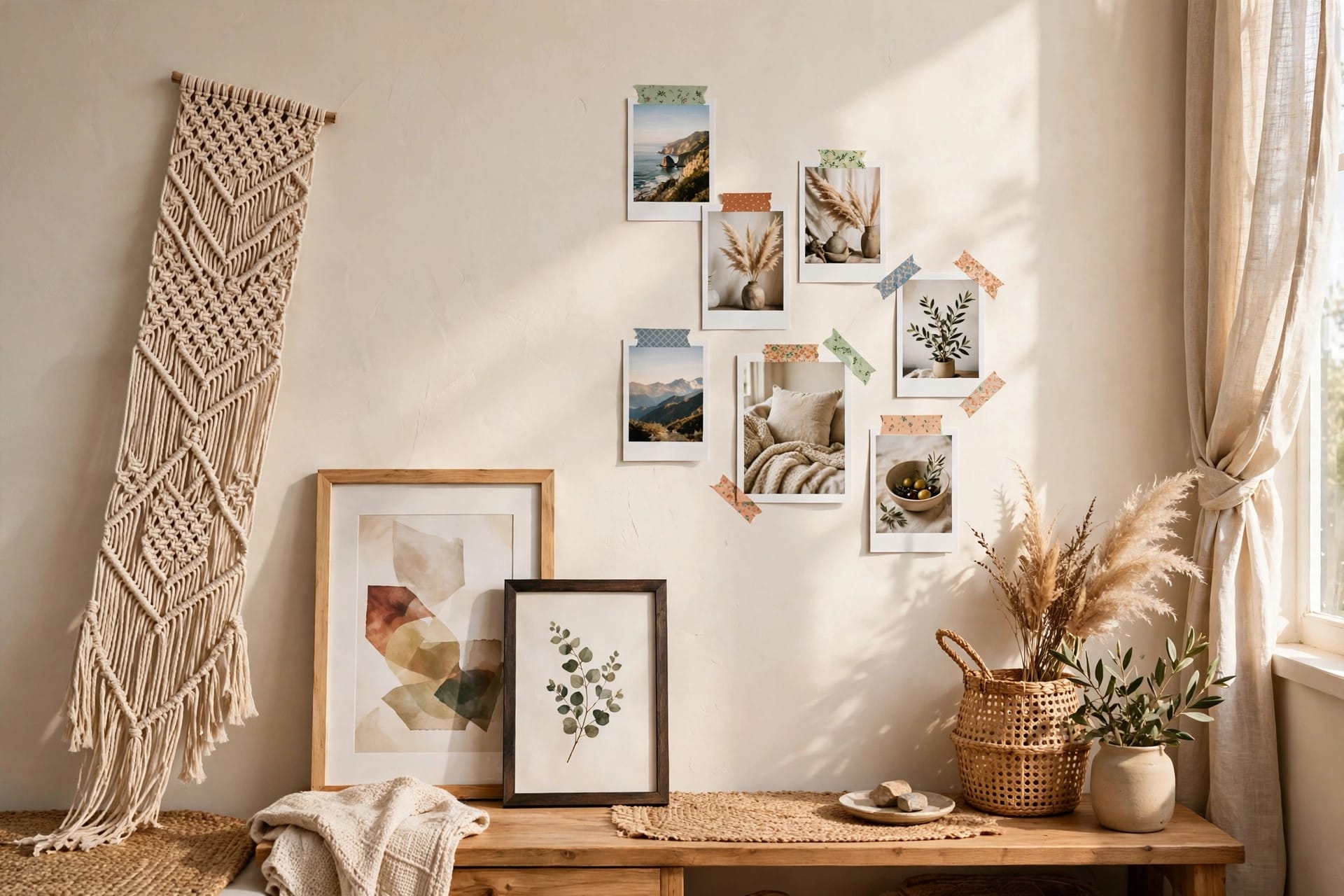
- Macramé wall hanging — weighs almost nothing; one adhesive hook holds it. The texture does the decorating work.
- Plaster art canvas — a finished 50×60 cm piece is 1.5–2.5 kg, well within strip range. Looks like a $200 gallery purchase.
- Taped gallery wall — washi tape frames around prints, zero adhesive on the wall beyond the tape itself. Full method in our beginner's guide.
- Fabric wall hanging — textile + dowel on one adhesive hook. Softens rooms in a way frames can't.
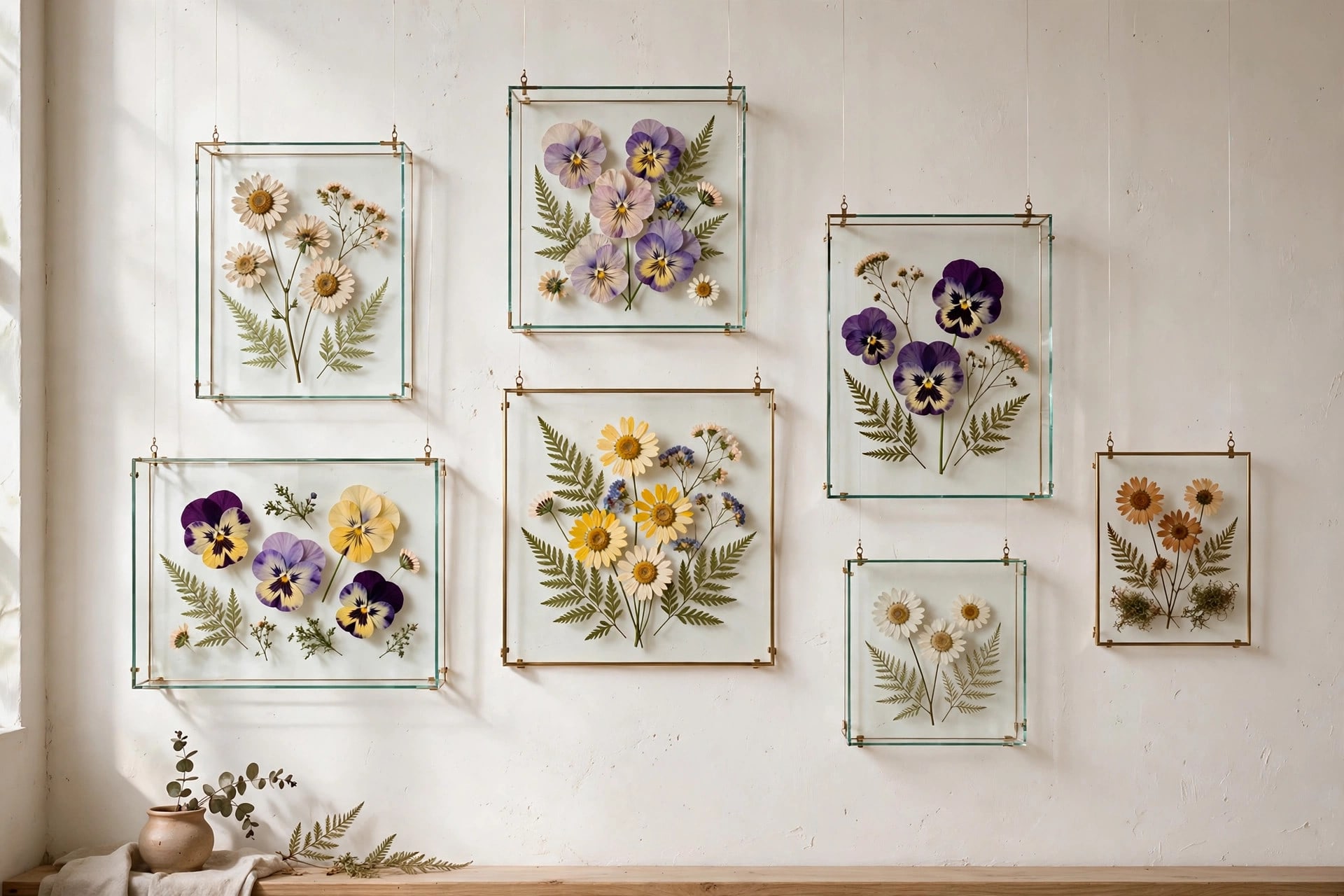
- Pressed flower art — floating frames are light; strips handle them easily. Botanical and delicate.
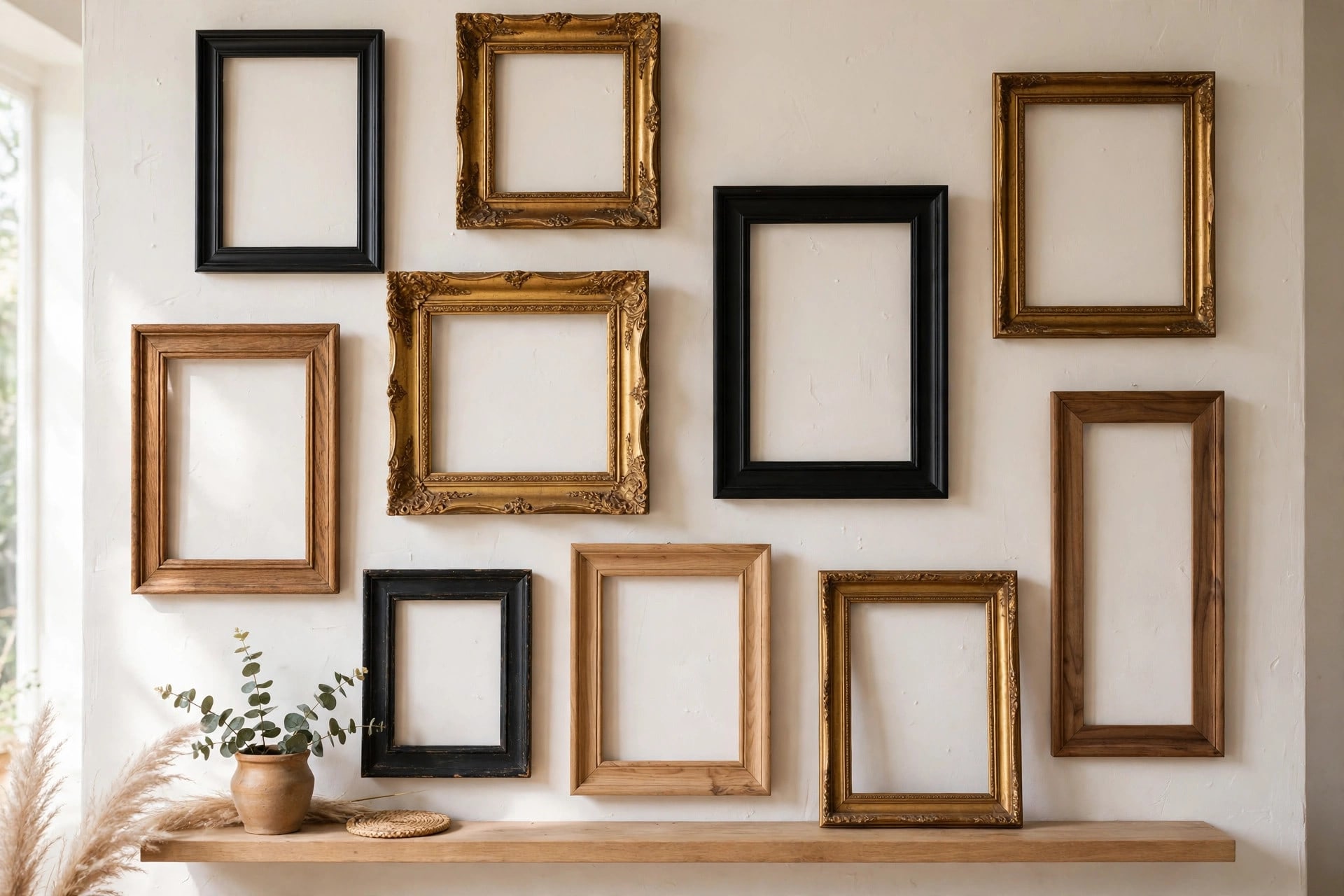
- Leaning oversized art — one big canvas or framed print leaned on a console or the floor against the wall. No wall contact at all. Scale = drama.
- Washi tape geometric mural — painter's tape + leftover paint in geometric patterns. The tape IS the art; peels off cleanly.
- Photo clip display — string or wire between two adhesive hooks, photos on mini clips. Swappable, personal, nearly free.
- Peel-and-stick decals — botanical, geometric, or quote decals for pattern without commitment. Quality brands remove cleanly; cheap ones don't — this is the one place to buy the good brand.
Move-out: clean removal
- Strips: pull the tab SLOWLY straight down along the wall (180°, not outward). Slow and steady — rushing tears paint. If a tab breaks, warm the strip with a hairdryer for 30 seconds and peel gently.
- Hooks: same tab-pull method.
- Washi tape: peels off by hand. If residue remains (old tape), warm with a hairdryer and roll off with your finger.
- Decals: warm with a hairdryer, peel slowly at a sharp angle. Quality brands leave nothing; budget brands may need a Magic Eraser for ghost residue — test in a hidden spot first.
- Document: photograph every wall after removal. If a strip does take paint (rare with proper removal), a dab of matching touch-up paint is cheaper than a deposit deduction — ask your landlord for the paint color at move-in.
5 renter decor mistakes
- Skipping the alcohol wipe. The #1 cause of strip failure. Sixty seconds of prep saves the 3 AM crash.
- Hanging immediately. The 1-hour wait isn't optional — it's when the bond forms.
- Overloading strips. A 7 kg rating doesn't mean 7 kg on textured walls, in bathrooms (humidity), or in heat. Derate by half in tough conditions.
- Cheap decals. The price difference between clean-removal and paint-peeling decals is $5. Buy the good ones.
- Leaving it all for move-out day. Remove decor a week early — if anything needs touch-up, you have time to fix it calmly.

The takeaway
Renters can have every bit as much wall decor as owners — it just hangs differently. Learn the adhesive prep ritual once, respect weight ratings, and remove slowly at move-out. Nine of our DIY projects work with zero holes; the only thing renting changes is the hanging hardware, not the art.
Frequently asked questions
How can I hang pictures without damaging rental walls? Adhesive picture-hanging strips (up to 7 kg with proper prep: alcohol wipe, 30-second press, 1-hour wait). For heavier pieces, lean them against the wall — no adhesive needed at all.
Do adhesive strips really not damage walls? When prepped and removed properly (slow 180° tab pull), yes — they come off cleanly on well-painted walls. Failures come from skipped prep, overloading, or rushing removal. Test in a hidden spot first on delicate paint.
What is the best renter-friendly wall decor? Lightweight DIY pieces: macramé hangings, plaster art canvases, taped photo galleries, fabric hangings, pressed flower art. All hang on strips or hooks; all leave zero trace at move-out.
Can renters use peel-and-stick wallpaper? Yes — quality removable brands come off cleanly on well-painted walls. Test a small hidden area first, remove slowly with gentle heat. Avoid on fresh paint (under 30 days) or flat/matte finishes, where adhesion is unpredictable.
Will my landlord know I used adhesive strips? No — if removed properly, they leave zero trace. That's the entire point. The only evidence is a wall that looks exactly as it did on move-in day, which is what the deposit is about.
What if a strip pulls off paint during removal? It happens rarely, usually from rushing the pull or skipping prep on delicate paint. Fix: dab of matching touch-up paint (ask for the color at move-in), feathered with a small brush. A 5-minute fix beats a deposit deduction.
How do I get my full deposit back on walls? Remove all decor a week before move-out, use proper strip-removal technique, touch up any marks with matching paint, and photograph everything. Most deposit deductions come from rushed last-day removal, not from decorating itself.