

Curtains are the single highest-impact change you can make in a small living room, and they cost less than almost anything else on the wall. Hung right, they make windows look bigger, ceilings look taller, and the whole room feel finished. Hung wrong — rod at the window frame, panels too narrow, hem hovering above the floor — they make the room feel shorter and cheaper, no matter what the sofa cost.
The frustrating part is that the rules are simple and almost everyone gets them wrong, because curtain packaging shows you the panel size, not the hanging size. This guide gives you the actual numbers: rod height, rod extension, panel width, and length, plus the renter-friendly options and the fabric choices that keep a small room feeling open.
Curtains work hardest when the rest of the room is already edited — if you haven't yet, our small living room ideas cover the layout and color rules they pair with.
Key Takeaways
- High and wide: mount the rod 6–10 inches above the window frame (or halfway to the ceiling) and extend it 6–12 inches past the frame on each side.
- Panel width: total panel width should be 1.5–2 times the window width, so curtains still fold when closed instead of stretching flat.
- Length: floor-kissing or floating ½ inch above the floor — never an ankle-length crop that stops inches short.
- Small-room fabric: light, airy fabrics in a color close to your wall color make the room feel bigger; heavy dark drapes do the opposite.
- Renters: tension rods and adhesive brackets give you the same high-and-wide look with no drilling.
Table of Contents
- The high-and-wide rule in one minute
- Measure before you order
- Fabric: what works in a small room
- One window, two windows, awkward windows
- Renters: the no-drill options
- Mistakes that shrink a small room
- FAQ
The high-and-wide rule in one minute
There are four numbers, and they do almost all the work:
Height: hang the rod about 6–10 inches above the window frame, or halfway to two-thirds of the way between the frame and the ceiling. On a standard 8-foot ceiling, that usually means 6–8 inches above the trim. On a low ceiling, mount as close to the ceiling as you can — the closer to the ceiling, the taller the room feels. If you have crown molding, leave 1–2 inches of breathing room below it and mount there.
Width: extend the rod 6–12 inches beyond the frame on each side. This is the number people skip, and it is the one that makes the biggest visual difference: when the curtains are open, the panels stack on the wall instead of on the glass, so the full window shows and the window itself looks wider. On a small window, going wider matters even more, because the window is already the smallest thing on the wall.
Fullness: total panel width should be 1.5–2 times the window width. For a 60-inch window, that means 90–120 inches of panel fabric in total. Less than that and closed curtains stretch flat like a bedsheet — the cheapest-looking mistake in the book.
Length: curtains should kiss the floor or float about ½ inch above it. Anything that stops several inches above the floor looks like a measuring error, and it chops the wall visually in half — the last thing a small room needs.
Get these four right and almost any curtain looks expensive. Get any one wrong and almost any curtain looks off.
Measure before you order
Measure the window, not the curtain packet. You need three numbers:
1. Rod length: window width + 12–24 inches (6–12 inches of extension per side). A 48-inch window needs a 60–72 inch rod. If you are between rod sizes, buy the longer one — a rod that is too short forces panels onto the glass.
2. Rod height to floor: measure from your planned rod position to the floor. That is your panel length. Standard ready-made lengths are 84, 96, and 108 inches. On an 8-foot ceiling with the rod near the ceiling, 96-inch panels usually land right. On a 9-foot ceiling, you need 108-inch panels. If you are between lengths, buy longer — you can hem curtains, but you cannot make them longer. Iron-on hemming tape costs a few dollars and takes ten minutes per panel.
3. Panel count: divide your target total width (1.5–2× window width) by the width of one panel. Most ready-made panels are 50–54 inches wide. A 60-inch window at 2× fullness needs 120 inches of fabric, which is three 50-inch panels — or two panels per side if you want symmetry, which gives you 200 inches and a very full look. Two panels per side is the standard for a finished look; one panel per side works only on narrow windows.
Buy the rod first, hang it empty, and live with it for a day before you order panels. An empty rod at the right height tells you more about the room than any measurement chart.
Fabric: what works in a small room
Fabric is where small rooms get won or lost. The rule is simple: light and airy beats heavy and dark, every time.
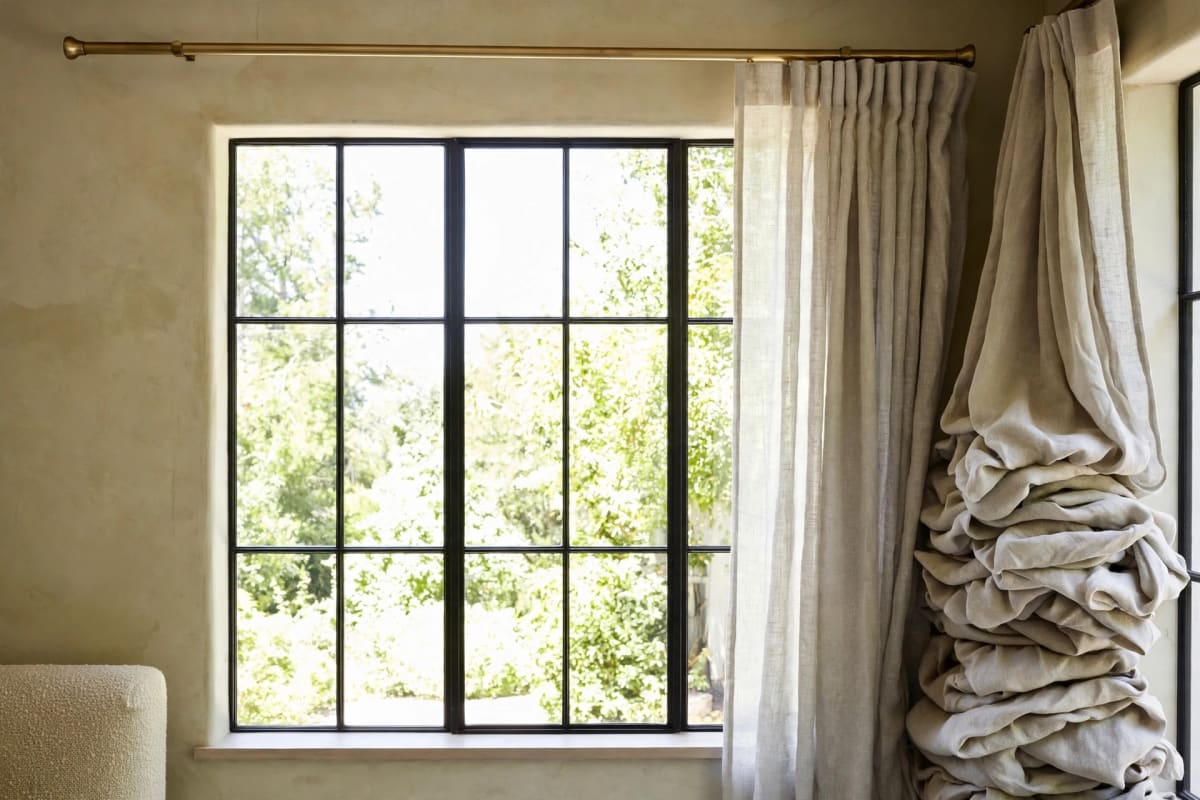
Sheer linen or cotton voile is the default winner for a small living room. It filters light instead of blocking it, it moves a little when the window is open, and it reads as soft rather than solid. A warm white, cream, or soft beige sheer keeps the room bright and makes the window feel like a light source rather than a wall.
Color matching the wall is the second trick. Curtains in a color close to your wall color blur the boundary between wall and window, and the room reads as one continuous space instead of a small box with holes in it. This matters more than pattern: a bold pattern on a small window chops the wall up, while a quiet solid extends it. If you want color, put it in the cushions and the rug, not the curtains.
Heavy fabrics — velvet, thick blackout, brocade — are the trap. They look luxurious in a big room and like a wall of fabric in a small one. If you need darkness for sleep or a TV, don't give up the sheer: use a double rod with sheers in front and a heavier blackout panel behind, and keep the blackout open during the day. You get darkness at night and airiness during the day, which is the only arrangement that serves both.
Weight and drape matter as much as color. A stiff polyester panel hangs like cardboard and never folds properly. A soft linen-blend or cotton panel falls in folds even at 1.5× fullness. If you are buying ready-made, hold the panel up in the shop: if it falls straight and stiff, leave it.
Our small living room paint colors guide names the warm whites and soft neutrals that pair best with light curtains, and the lighting guide covers what to do when the window itself doesn't give you enough light.
One window, two windows, awkward windows
One window on a short wall: run the rod almost wall to wall. This is the single best trick for a small room: the curtain wall reads as one wide window, and the room feels twice as wide as it is. The panels will spend most of their life stacked on the wall, which is exactly the point.
Two windows on one wall: hang one long rod across both and dress them as a single unit, with panels at the outer edges and one shared panel (or none) in the middle. Two separate rods with a gap between them chops the wall in half and makes both windows look smaller.
Bay windows: either one rod per section with the panels drawn to the sides, or a ceiling-mounted track that follows the bay. Tracks are the cleaner option and the cheaper one, and they solve the corner problem that rods can't.
Short, wide windows: hang high and let the panels fall to the floor anyway. Sill-length curtains on a short window make the wall look squat; floor-length panels make the same window look tall. The only exception is a window above a radiator or a kitchen sink, where sill length is practical, not decorative.
Window next to a door or a corner: extend the rod toward the open wall, not into the corner. If the window is 6 inches from a corner, put 2 inches of extension on the corner side and 10–12 inches on the open side. Symmetry is nice; light and proportion matter more.
Radiator below the window: floor-length curtains over a radiator block heat and can scorch. Use sill-length panels here, or a radiator shelf that deflects heat outward — but don't pretend floor-length works over a hot radiator. It doesn't.
Renters: the no-drill options
You do not need to drill to get the high-and-wide look, and your deposit will thank you for not trying.
Tension rods fit inside the window frame, which means they can't go high or wide — the one thing that makes curtains look good. They are the fallback, not the plan: use them only where a frame-mounted rod is genuinely impossible, and accept that the window will look its actual size.
Adhesive brackets are the real renter answer. They stick to the wall above and beside the frame, hold a standard rod, and peel off cleanly. Check the weight rating before you buy — most hold 5–10 pounds, which covers sheers and light cotton but not heavy blackout panels. Use two brackets per side for anything heavier, and test one on a hidden patch of wall first.
Ceiling-mounted tracks with adhesive or minimal-screw mounts give you the tallest possible hang and work beautifully in rentals with concrete walls where drilling is miserable anyway. They also solve bay windows and wall-to-wall runs in one piece.
Command-style hooks as tiebacks cost almost nothing and let you hold open panels against the wall during the day, which is half the high-and-wide effect for free.
When you move out, the test is simple: if the wall needs more than a dab of filler, the method was wrong. Our renter-friendly wall decor guide covers the same no-damage logic for everything else on the wall.
Mistakes that shrink a small room
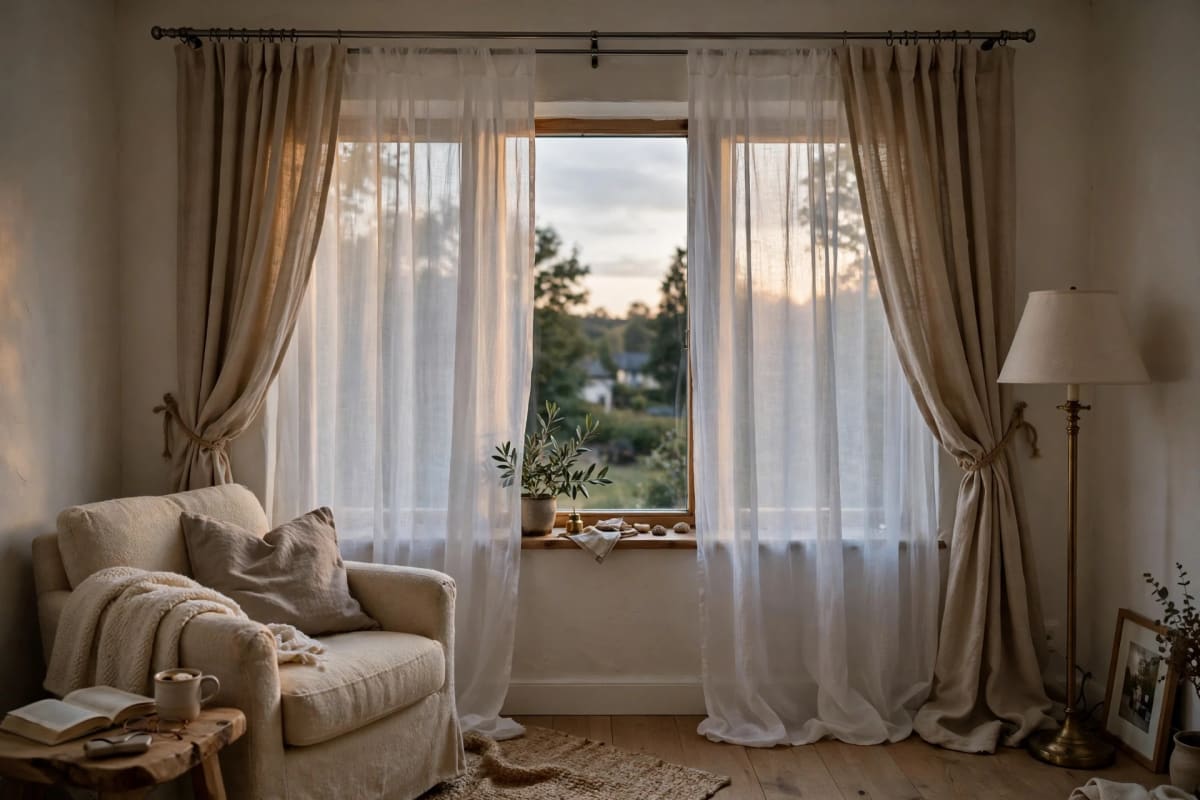
- Rod at the frame. The most common mistake and the most damaging: it makes ceilings feel lower and windows look squat. Move the rod up and the room changes the same day.
- Panels too narrow. Closed curtains that stretch flat instead of folding look like a bedsheet hung over the window. Total width 1.5–2× the window, always.
- Ankle-length hems. Curtains that stop inches above the floor look unfinished and chop the wall in half. Kiss the floor or float ½ inch above it.
- Dark, heavy fabric on a small window. Velvet and heavy blackout swallow light and turn a small window into a dark rectangle. Use sheers, and layer blackout behind them only if you need darkness.
- Flimsy rods that sag. A sagging rod in the middle ruins the whole effect and eventually dumps the curtains on the floor. Buy a rod rated for your panel weight, and add a center bracket on anything wider than 60 inches.
- Matching the curtains to nothing. Curtains that match neither the walls nor anything else in the room float visually. Match the wall color for space, or echo one color from the rug or cushions.
FAQ
How high should I hang curtains in a small living room?
About 6–10 inches above the window frame, or halfway to two-thirds of the way between the frame and the ceiling. On a low ceiling, mount as close to the ceiling as you can. The higher the rod, the taller the room feels — this is the single most effective trick for a small space.
How wide should the curtain rod be?
Window width plus 12–24 inches total — 6–12 inches of extension past the frame on each side. The extension lets open panels stack on the wall instead of covering the glass, which makes the window look wider and lets in more light.
How many curtain panels do I need?
Total panel width should be 1.5–2 times the window width. For a 60-inch window, that is 90–120 inches of fabric, which usually means two panels per side with standard 50-inch panels. One panel per side only works on narrow windows.
What length curtains make a small room look bigger?
Floor-length: panels that kiss the floor or float about ½ inch above it. The unbroken vertical line from ceiling to floor draws the eye upward and makes the room feel taller. Avoid curtains that stop several inches above the floor.
What color curtains make a small living room look bigger?
Light colors — white, cream, light gray, soft beige — and, best of all, a color close to your wall color. Matching the wall blurs the boundary between wall and window, and the room reads as one larger space instead of a small box.
Can renters hang curtains high and wide without drilling?
Yes. Adhesive brackets hold a standard rod above and beside the frame and peel off cleanly — check the weight rating first, since most hold 5–10 pounds. Ceiling-mounted tracks are another no-drill option, and tension rods are the fallback where nothing else fits.