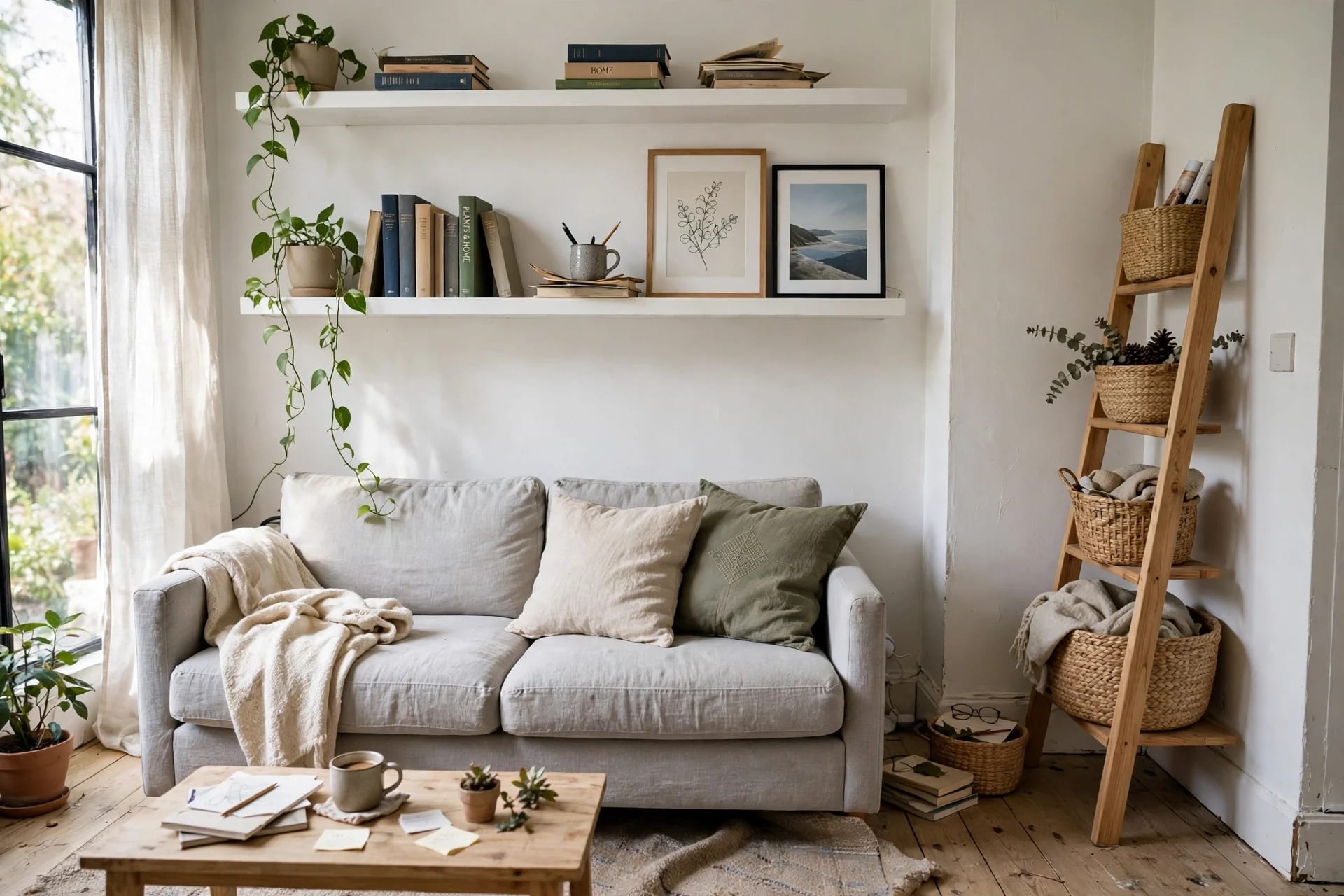
A small living room has two storage problems, not one: nowhere to put things, and nowhere to put things that doesn't make the room feel smaller. Shelving solves the first problem and causes the second one whenever it's chosen on looks alone. A deep bookcase against the only long wall eats a foot of floor and turns the walkway into a corridor; a row of floating shelves hung too high becomes a dust museum you need a chair to reach. The right answer depends less on style than on three boring variables: how much weight it must hold, how deep it can be, and whether you're allowed to drill.
Here's the comparison I wish someone had handed me before my first shelf pulled out of drywall — with real numbers, not catalog optimism.
Key Takeaways
- Floating shelves hold 20–50 lb each in practice; bracketed or wall-mounted units hold 50–100 lb — the wall, not the shelf, usually decides
- Into a stud, almost anything holds; into drywall alone, almost nothing heavy does — toggle bolts are the minimum for books
- Keep shelf depth at 8–10 inches for living rooms; deeper shelves push you off the walkway and swallow small objects
- A loaded MDF shelf sags past about 30 inches of span — shorten the span or step up to 1-inch-plus solid wood
- Renters: leaning ladder shelves and adhesive ledges for light decor only; real books need studs or a floor-standing unit
Table of Contents
- The weight question first
- Five shelving solutions compared
- Placement rules that make the room feel bigger
- What to put where: the book-weight math
- Renter-friendly options that actually work
- Mistakes that ruin good shelving
- FAQ
The weight question first
Every shelving decision starts with weight, because weight decides the mounting, and the mounting decides everything else. Catalog ratings are measured in perfect conditions — into studs, evenly loaded, short spans. Your wall is not a laboratory.
- Floating shelves (hidden rod brackets): most retail sets rate 20–50 lb per shelf, and the honest middle is around 30 lb. A 48-inch engineered-wood shelf rated 66 lb exists, but only when its bracket hits two studs. The same shelf on drywall anchors alone holds roughly half its rating before it starts its slow lean.
- Bracketed shelves (visible metal or wood brackets): 50–100 lb per shelf is realistic, because the bracket triangulates the load back into the wall instead of cantilevering it off a rod. If books are the job, this is the job's shelf.
- Wall-mounted cabinets and box shelves: similar to bracketed, 50-plus lb when stud-mounted; the box shape adds rigidity that a flat board doesn't have.
- Ladder and leaning shelves: the floor carries the weight, so the rating is generous — but the lean eats 12–16 inches of floor depth at the base, which is exactly what a small room can't spare near a walkway.
The rule that matters: a screw in a stud holds 50–75 lb of shear load; a good toggle bolt in half-inch drywall holds 30–50 lb; a plastic expansion anchor holds 10–20 lb and should never be trusted with books. Find the studs first with a $15 stud finder (or the knock-and-listen method if you're patient), and plan the shelf positions around the studs, not around the symmetry you sketched. Studs run 16 inches on center in most homes, so a 32- or 48-inch shelf lands neatly on two or three of them.
If the wall is plaster over lath, masonry, or metal studs, the rules change — plaster crumbles around small anchors, masonry wants its own anchors, and metal studs need fine-thread screws or toggles. Our renter friendly wall decor guide covers the anchor math in more detail.
Five shelving solutions compared
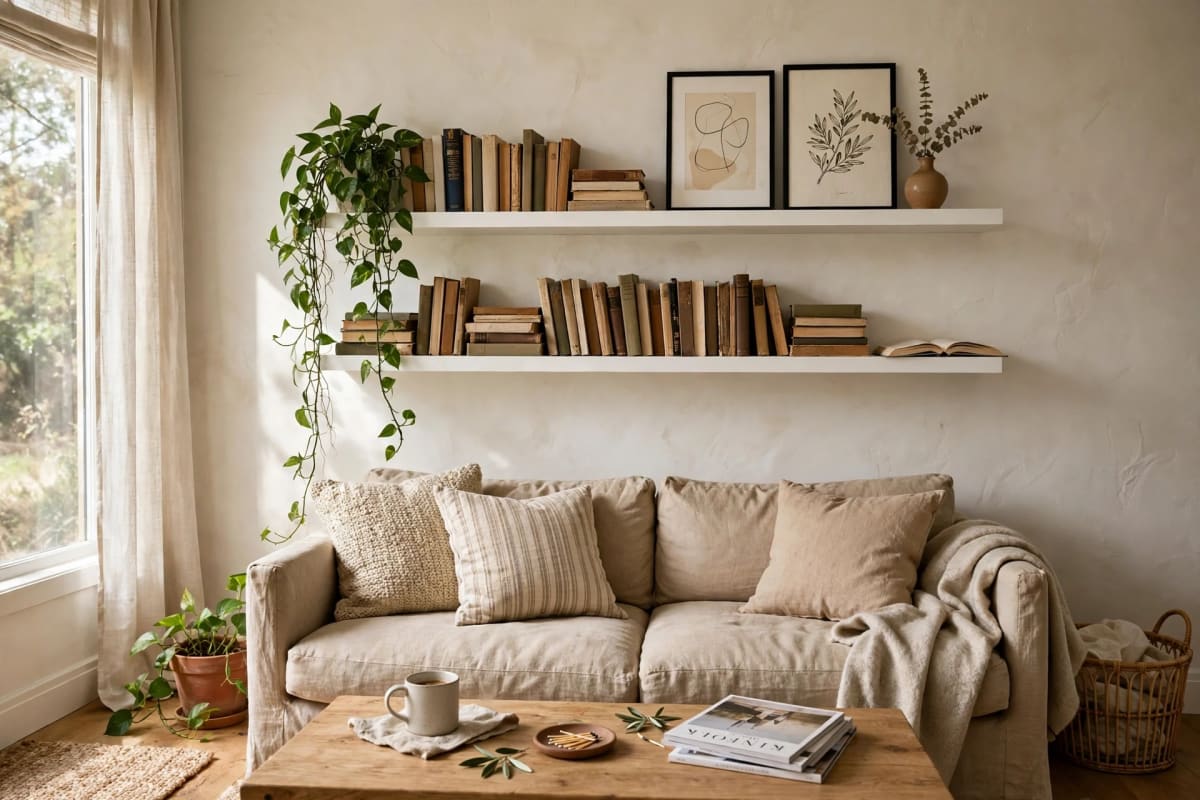
1. Floating shelves — best for display, worst for libraries. Clean, modern, no visual clutter. Cost: $15–$40 per shelf for decent retail sets, $25–$60 for solid wood. Depth is usually 6–10 inches, which is right for living rooms. Limit: one row of paperbacks plus a plant, not a book collection. Span rule: keep them under 36 inches unless they're thick solid wood, or the middle will sag visibly within a year under books. Full install detail lives in our DIY floating shelves guide.
2. Picture ledges — best for rotating art and small rooms. A ledge is a shallow shelf with a lip, made for leaning frames. Depth 3–4 inches, so it barely leaves the wall. Brilliant above a sofa or desk because you can swap art without new holes — the frames just lean. Useless for books (they fall forward) and for anything deeper than a frame. Cost: $10–$25 per ledge.
3. Bracketed wood shelves — best for real storage. Visible brackets are unfashionable and that's precisely why they work: the triangle is the strongest shape in shelving. A 10-inch-deep pine board on two steel brackets, screwed into studs, will hold a row of hardcovers without drama. Paint the brackets the wall color and they nearly disappear. Cost: $20–$50 per shelf all-in, and you choose the board, the length, and the spacing instead of accepting a set's.
4. Wall-mounted cabinets and box shelves — best for hiding clutter. A closed box hides the mess that open shelving displays. In a small living room, one or two boxes flanking the TV (see our small living room TV layout ideas) store remotes, chargers and games without a single visible object. Downside: depth is usually 12 inches or more, so hang them where nobody walks — above a console, never above a walkway at head height.
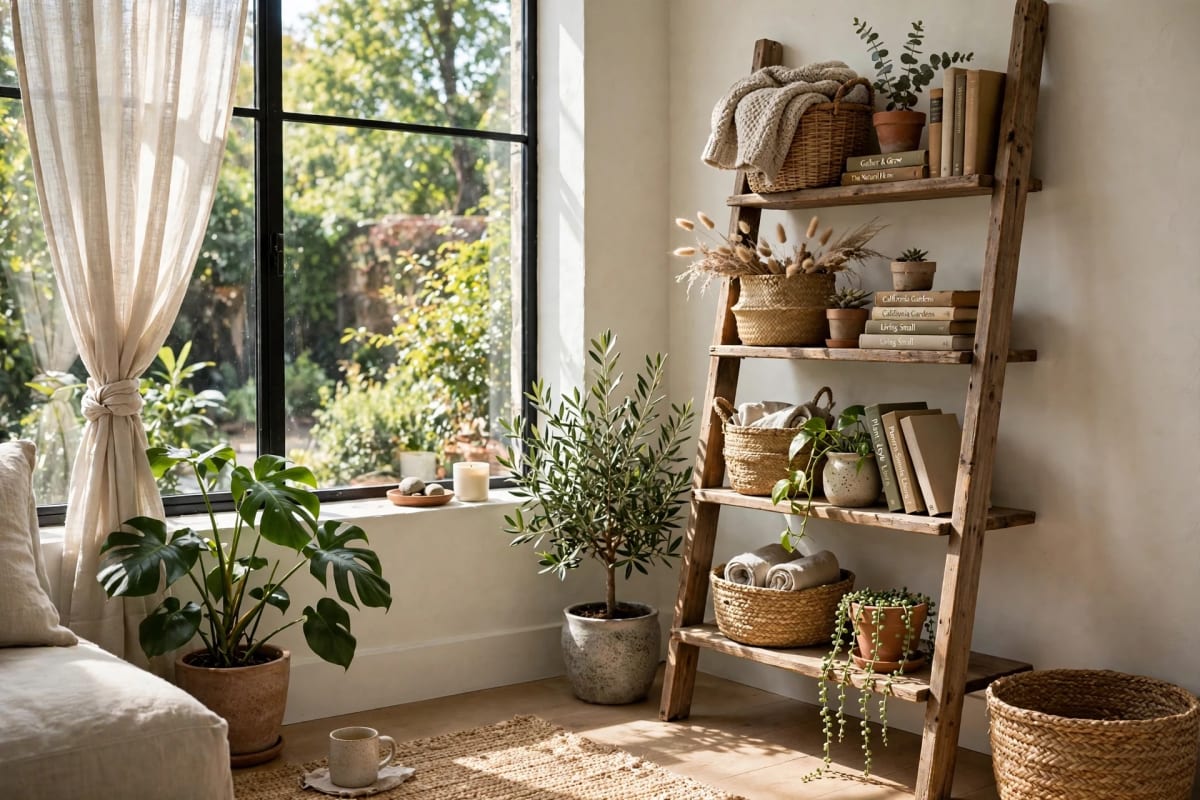
5. Leaning ladder shelves — best for renters, worst for walkways. No drilling, decent capacity, and they look intentional. But measure the footprint honestly: a 5-tier ladder shelf leans out 14–18 inches at the floor. Against a wall behind a door swing or beside a sofa, that's fine. In the path between sofa and kitchen, it's a shin-level ambush. Cost: $60–$150.
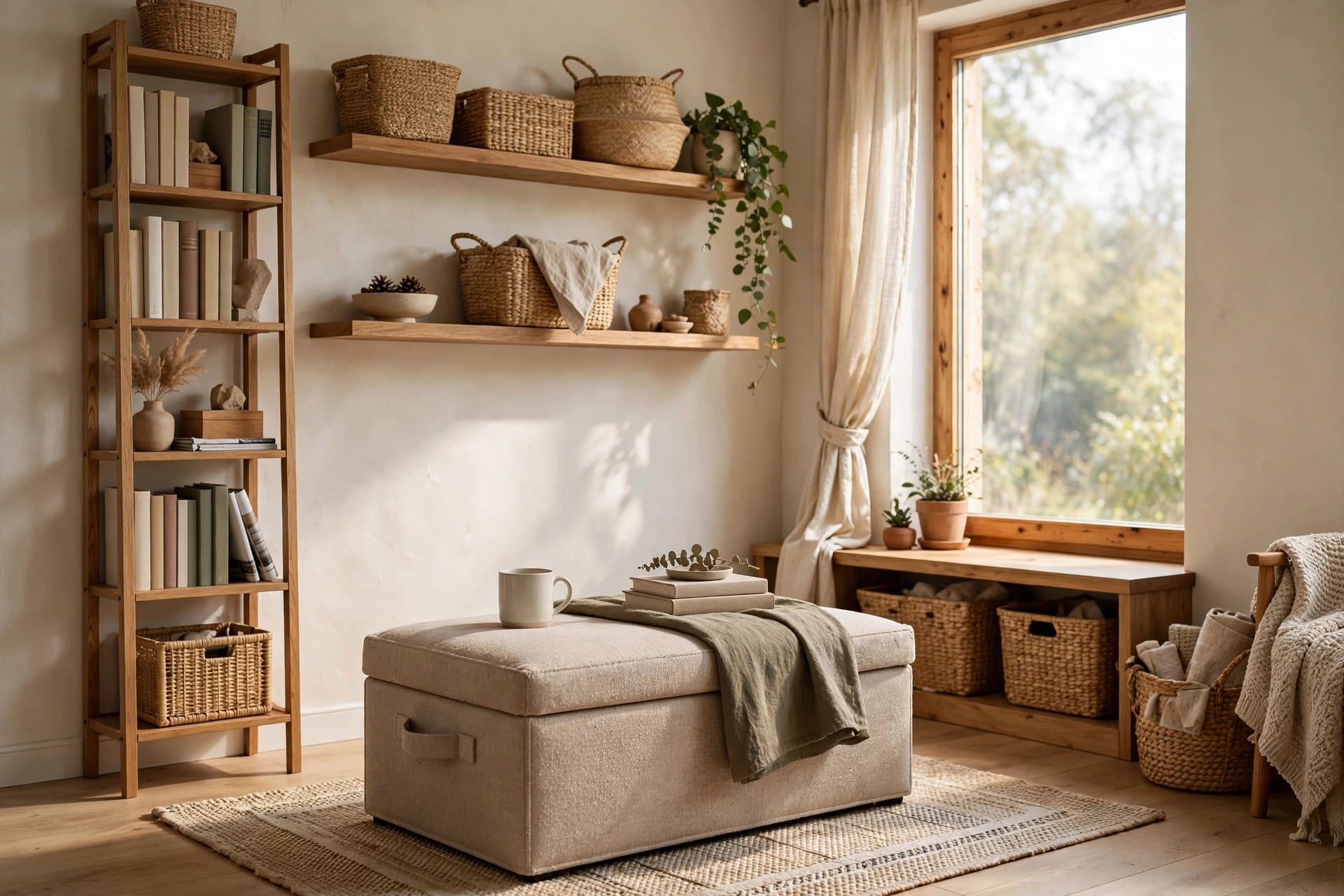
For most small living rooms, the winning combination is two floating shelves for display plus one bracketed shelf (or a wall cabinet) for the heavy work — display where the eye goes, capacity where the books go.
Placement rules that make the room feel bigger
Shelving changes how big a room feels, and the mechanism is simple: shelves draw the eye up and out, but only if they sit where the eye naturally travels.
- Above the sofa: center the shelf 8–12 inches above the sofa back, and keep the total width around two-thirds of the sofa's width. Wider reads as a wall; narrower reads as an afterthought. This is the single highest-impact spot in most living rooms.
- Around the TV: shelves flanking the TV (not above it, where heat and glare live) turn a black rectangle into a composed wall. Keep them at least 6 inches clear of the screen's edge.
- High, near the ceiling: one long shelf 12 inches below the ceiling works for books you rarely touch and plants that trail — it uses dead space without entering your sightline. But anything above 72 inches needs a step stool, so don't put daily items there.
- Corners: a corner is a small room's most wasted real estate. Two short shelves meeting in a corner, or a corner-specific unit, hold plants and small objects without touching the main walls at all.
- Above doors and windows: the 12-inch band above a door frame fits a single shelf for books or baskets. It's genuinely useful and genuinely forgotten — which is the point. Measure your door clearance first; a shelf that clips tall guests' foreheads is worse than no shelf.
Spacing between shelves: 12–15 inches for books and decor, 18 inches if anything tall (vases, plants) sits on them. Tighter than 12 inches and you can't pull a book out without scraping the shelf above.
What to put where: the book-weight math
Books are the load case everyone underestimates. A linear foot of paperbacks weighs roughly 15–20 lb; a foot of hardcovers runs 20–30 lb. A 36-inch shelf fully loaded with hardcovers is carrying 60–90 lb — double what most floating shelves honestly hold. That's why "weight-bearing floating shelves" is a search query with a worried tone: people buy the shelf, load it like a bookcase, and watch it tilt.
The fix is distribution, not stronger shelves:
- Books go low and bracketed. The lowest shelf in a stack carries the books; upper shelves carry plants, frames, and ceramics.
- Mix heavy and light on the same shelf. Books on one end, a plant on the other — the plant end counterbalances and the shelf looks styled instead of warehoused.
- Leave breathing room. A shelf packed edge to edge reads as storage; a shelf at 70% capacity with one gap reads as display. The gap is free and it makes the room feel calmer.
- Baskets for the small stuff. Remotes, chargers, dog toys and game controllers go in one basket per shelf, not scattered. One basket is decor; five loose objects are clutter.
For the rest of the room's storage logic — what lives in closed storage versus open shelves — our small living room storage guide maps the whole system.
Renter-friendly options that actually work
Renters get the worst shelving advice on the internet: adhesive strips rated for picture frames, recommended for shelves. Here's the honest version:
- Leaning ladder shelves: genuinely no damage, genuinely useful, if you have the floor depth. Anchor the top to the wall with a removable hook if you have kids or pets — a leaning shelf tips forward when a toddler climbs it.
- Tension-pole shelving: floor-to-ceiling poles with shelves that wedge in place. No holes, surprising capacity, but they look utilitarian and they need a truly flat ceiling to grip.
- Adhesive ledges: fine for a phone, a tiny plant, or a paperback or two — total load under 5 lb per ledge, on smooth painted walls only, never on textured or fresh paint. Anything heavier is a future dent in the floor.
- Command-strip picture ledges: the strips hold, until humidity or a warm wall changes their mind. Check them monthly; the failure mode is silent and sudden.
If your lease allows "small nail holes" (most do, with filler on move-out), a pair of bracketed shelves into studs is the best renter upgrade in the entire apartment — two shelves, four holes, filled in ten minutes when you leave. Ask the landlord; the answer is yes more often than renters expect.
Mistakes that ruin good shelving
- Hanging shelves at picture height. Art hangs at eye level (57 inches to center); shelves need clearance above them for objects. A shelf centered at 57 inches puts tall books into your sightline and forces a duck. Shelves live higher than art — start at 60–66 inches for the lowest shelf.
- One long shelf instead of two short ones. A 60-inch shelf needs three studs and perfect leveling; two 30-inch shelves need two studs each and forgive a slightly uneven wall. Shorter spans also sag less.
- Ignoring the sag rule. MDF and thin pine sag under sustained load. The visible test: sight along the shelf from the end after six months. If you can see daylight under a straightedge in the middle, the span was too long or the board too thin. Fix it by adding a middle bracket before it becomes permanent.
- Shelves above radiators and heaters. Heat dries wood, warps boards, and cooks books. Keep 12 inches of clearance above any heat source, and never put a plant shelf directly over a radiator — you'll water it twice as often and it will still crisp.
- Buying the set instead of the shelf. Sets of three or five identical shelves force symmetric arrangements that rarely fit real walls with windows, outlets, and radiators in the way. Buy individual shelves in the lengths your wall actually needs; treat symmetry as a starting point, not a rule.
- Forgetting the room's layout. Shelving belongs in the layout, not on top of it — plan it with the sofa, TV and walkways together, the way our small living room furniture arrangement guide lays out the whole room, and the shelves will look built-in instead of bolted-on.
FAQ
What is the best shelving solution for a small living room? Two floating shelves for display plus one bracketed shelf (or a wall cabinet) for heavy items. Floating shelves keep the look light; the bracketed shelf does the real work. For renters, a leaning ladder shelf is the no-drill equivalent.
How much weight can a floating shelf hold? Typically 20–50 lb per shelf when mounted into studs, less on drywall anchors alone. Books are heavier than people expect — a foot of hardcovers is 20–30 lb — so keep book rows on bracketed shelves and use floating shelves for plants, frames, and ceramics.
How high should shelves be above a sofa? 8–12 inches above the sofa back, spanning about two-thirds of the sofa's width. Higher than that and the shelf disconnects from the seating; lower and tall objects collide with heads.
Can I put shelves on a wall without studs? Light loads, yes — toggle bolts in drywall hold 30–50 lb each and are the minimum for anything heavier than decor. For books, find the studs or use a floor-standing unit. Plastic expansion anchors are not a book solution.
How deep should living room shelves be? 8–10 inches for most uses. Deeper shelves push into walkways and let small objects get lost at the back; shallower than 8 inches won't hold a standard book upright.
Do floating shelves sag over time? Thin MDF and pine shelves sag past about 30 inches of span under sustained book weight. Shorten the span, add a middle bracket, or step up to 1-inch-plus solid wood — and check with a straightedge after six months.