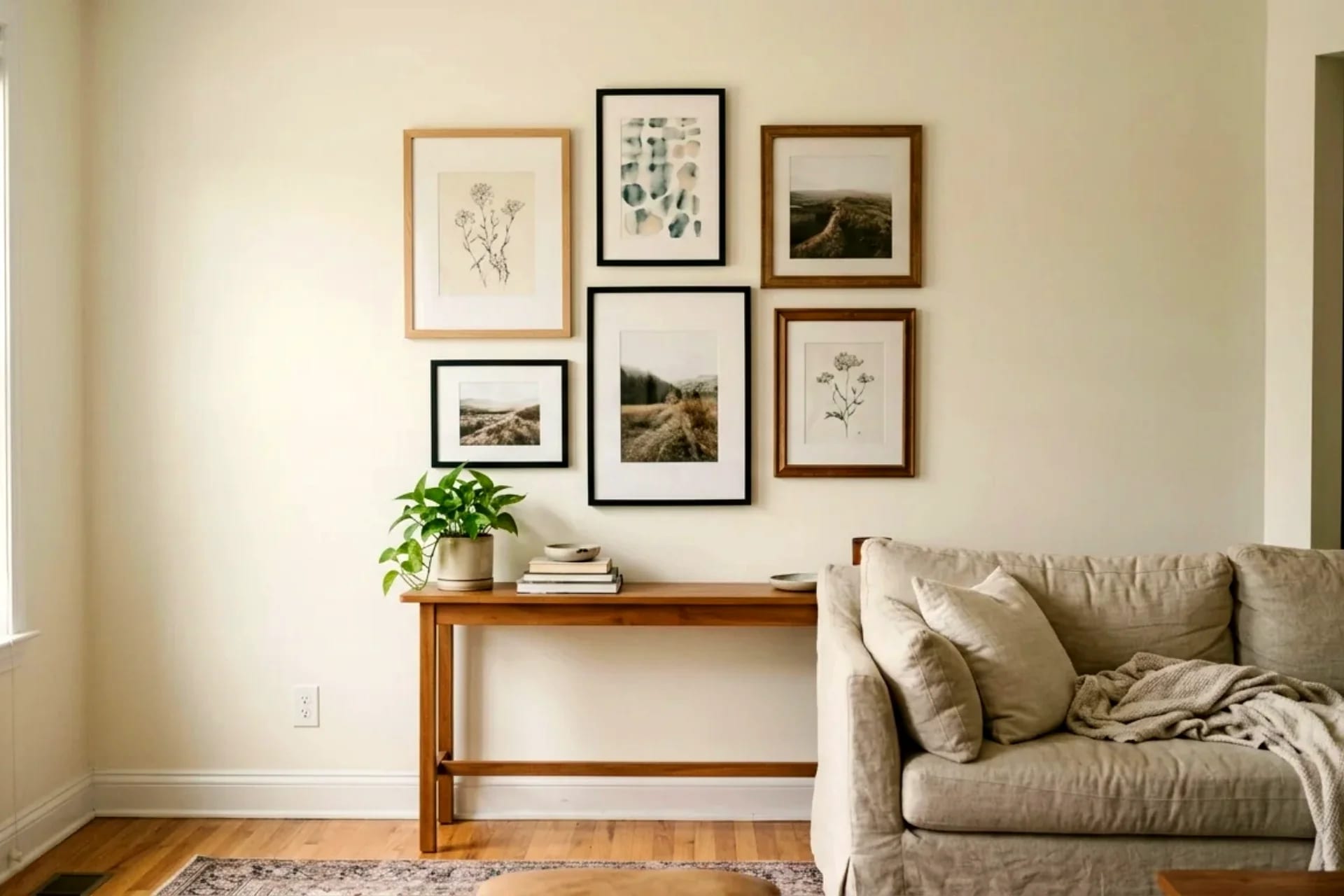
Every renter knows the math: one nail hole costs about 10 minutes to patch and paint — or $50–$150 off your deposit if you don't. Multiply that by a full gallery wall and "just hanging some art" turns into a weekend of spackle. Damage-free wall decor skips the whole problem. No drilling, no nails, no patching, no landlord conversations.
If you're building out your walls from scratch, start with our DIY wall decor beginner's guide for the big picture — this guide is the deep-dive on hanging everything without a single hole.
Key Takeaways
- Best all-rounder: adhesive hanging strips — hold 1–7 kg per set when prepped right
- The step everyone skips: clean with rubbing alcohol + wait a full hour before hanging (this alone fixes 80% of failures)
- Heaviest damage-free option: leaning large art on the floor or a shelf — zero wall contact, unlimited weight
- #1 rule: never hang on paint less than 30 days old, and never exceed the strip's rated weight
- Removal: pull the tab straight down slowly — never yank outward
Table of Contents
- Why damage-free is worth doing right
- The methods, ranked by what they can hold
- Adhesive strips and hooks: the full technique
- No-adhesive options that need zero wall contact
- Weight limits cheat sheet
- Removal without damage
- 5 mistakes that cause damage anyway
- Frequently asked questions
Why damage-free is worth doing right
Patching a nail hole is genuinely easy — dab of spackle, sand, touch up paint. The problem is never one hole. It's twelve holes from the gallery wall you rearranged three times, plus the anchor holes from the mirror, plus the paint that peeled when you pulled off that "removable" hook wrong. Landlords don't charge per hole; they charge per wall that needs repainting, and a single repainted wall runs $100–$250 in most cities.
Damage-free methods done properly hold as reliably as nails for anything under about 7 kg — which covers roughly 90% of wall decor: framed prints, canvases, small mirrors, wall hangings, shelves with light styling. The failures you hear about ("my frame crashed at 2am") are almost never the product's fault. They're prep failures, weight failures, or impatience failures. This guide eliminates all three.
The methods, ranked by what they can hold
Adhesive hanging strips (1–7 kg per set)
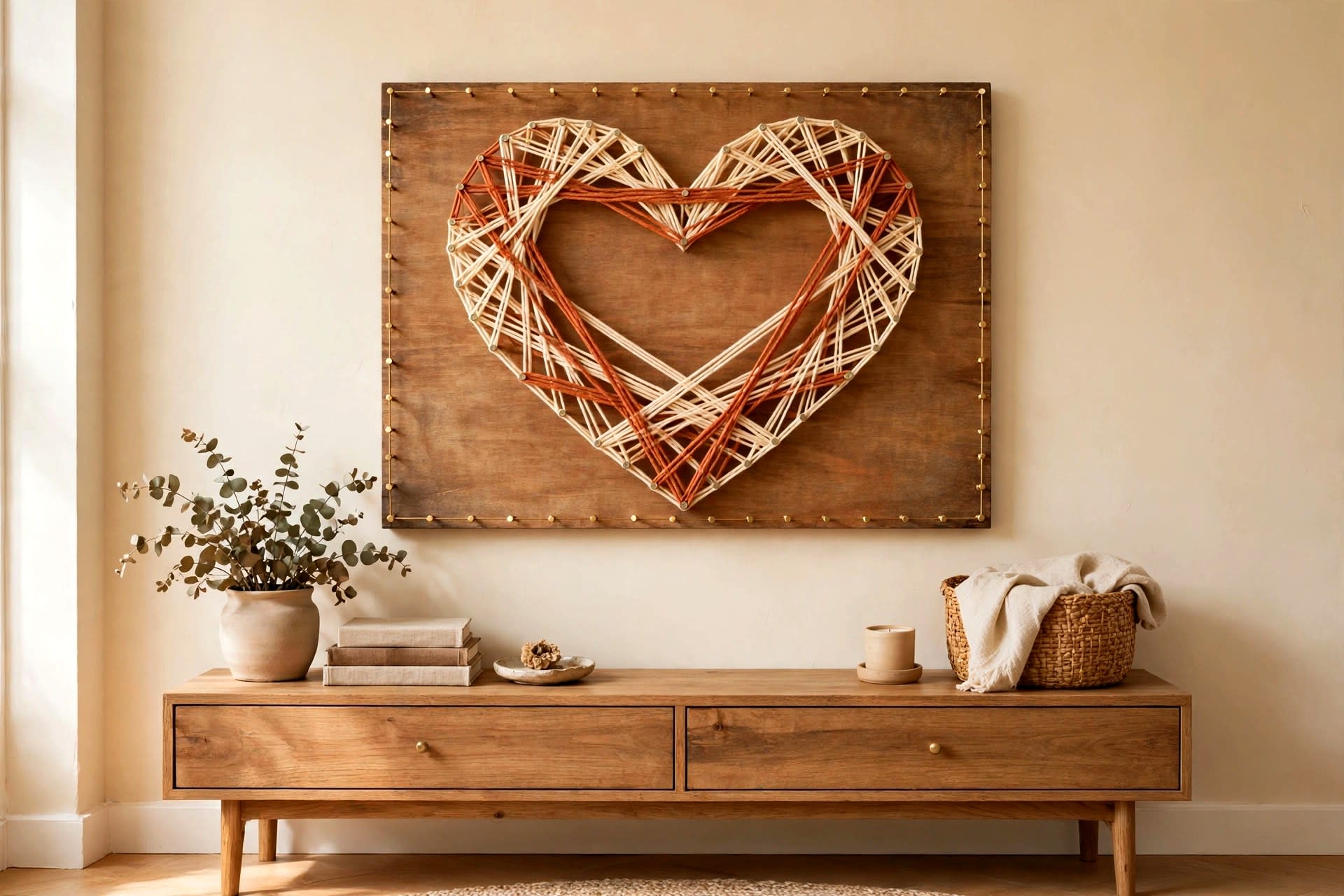
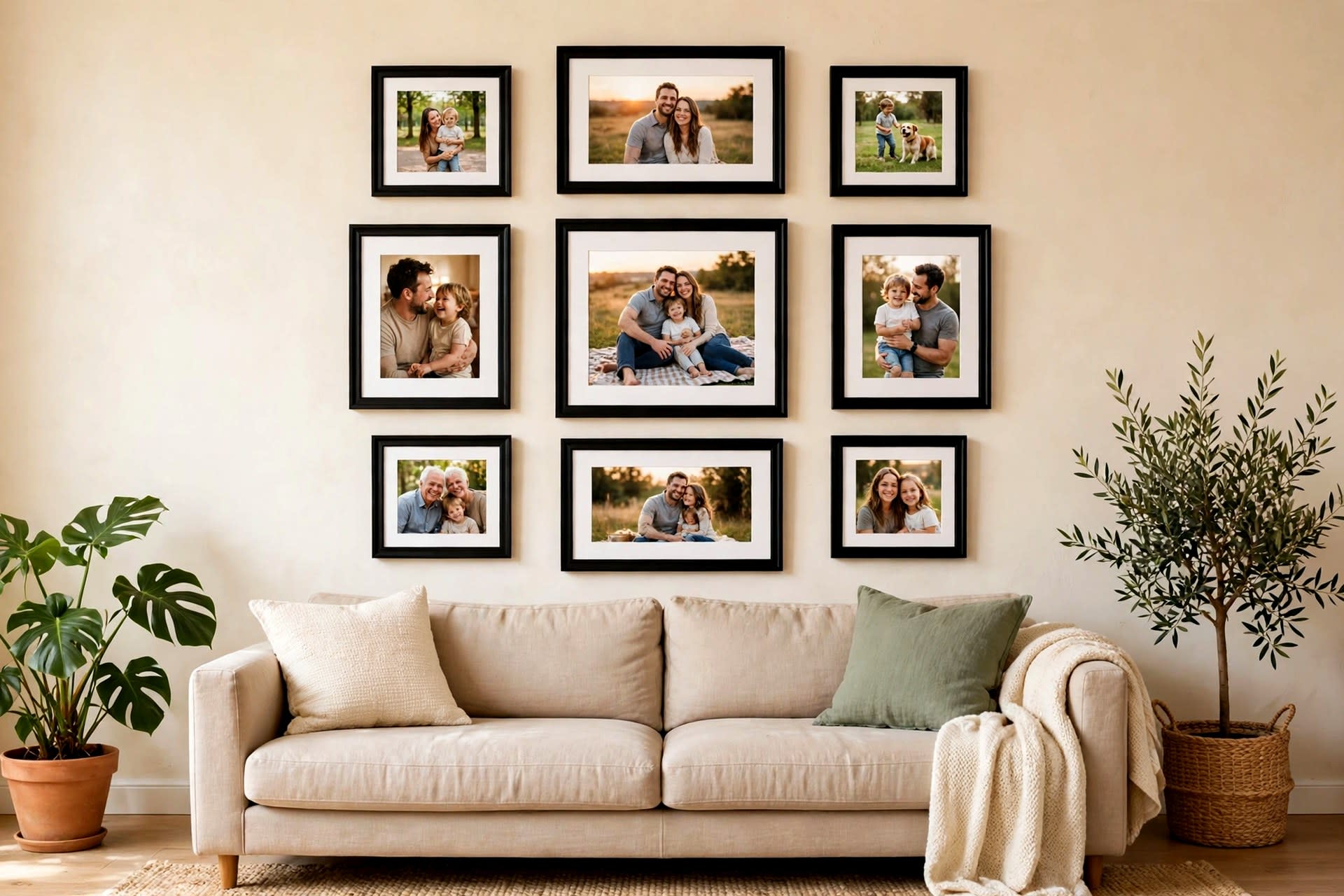
The workhorse. Interlocking strips (the hook-and-loop style) hold frames flush to the wall with no visible hardware — the cleanest look of any method here. Small sets hold ~1.8 kg (one frame up to 20×25 cm); large sets hold ~7 kg (up to 60×90 cm frames). Use multiple sets for wide pieces: two large sets side by side handle a 60×90 cm frame comfortably.
Best surfaces: smooth painted drywall, finished wood, tile, glass, metal. Worst surfaces: brick, concrete, textured/knockdown walls, wallpaper (it'll take the paper with it), and fresh paint.
Adhesive hooks (0.5–3.5 kg each)
Better than strips for anything with a wire or D-ring hanger — mirrors, wall hangings, wreaths, small shelves. The hook takes the load; the adhesive takes the wall. Same surface rules as strips.
Lean and layer (unlimited weight)
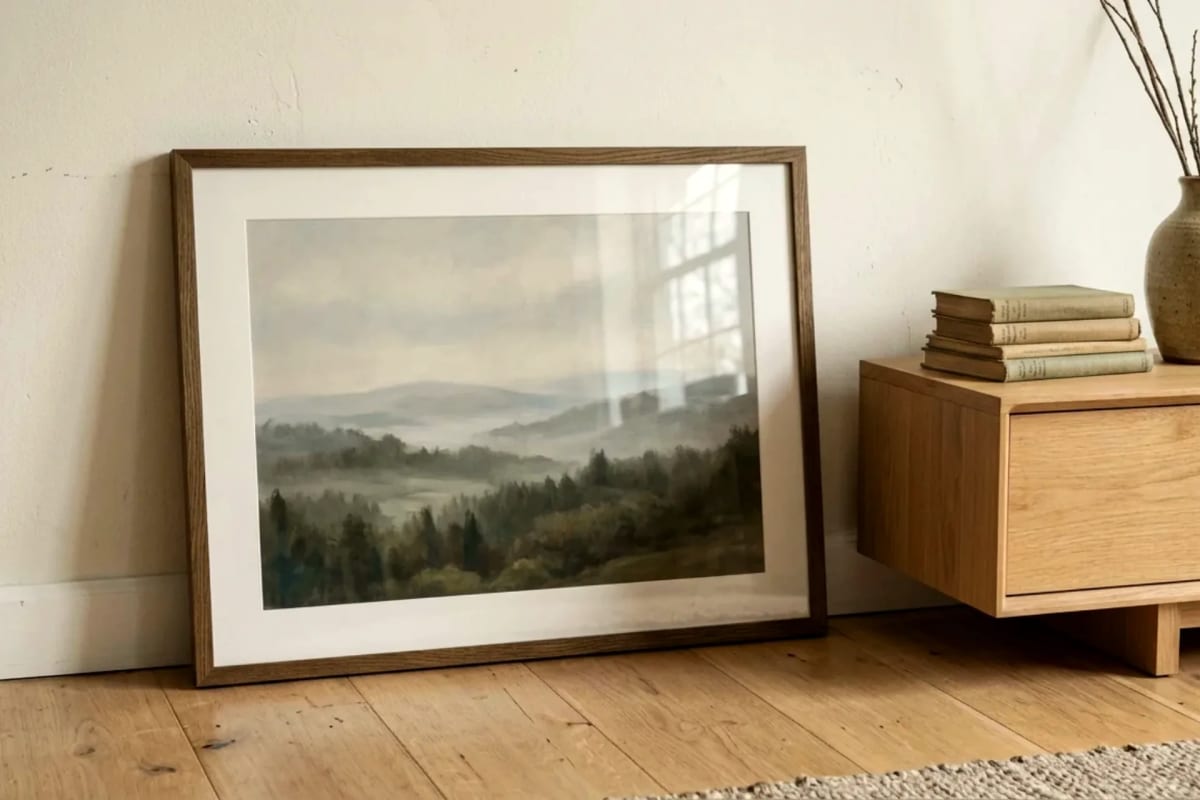
The heaviest damage-free method of all: don't hang it. Large framed art and mirrors leaned against the wall on the floor, on a console, or on a shelf look intentional — galleries do it. A 100×140 cm framed print that would need anchors and prayers on the wall just... stands there. Secure the top edge with a single adhesive strip or museum putty if you have kids, pets, or earthquakes.
Plate ledges and picture shelves with adhesive (3–5 kg per shelf)
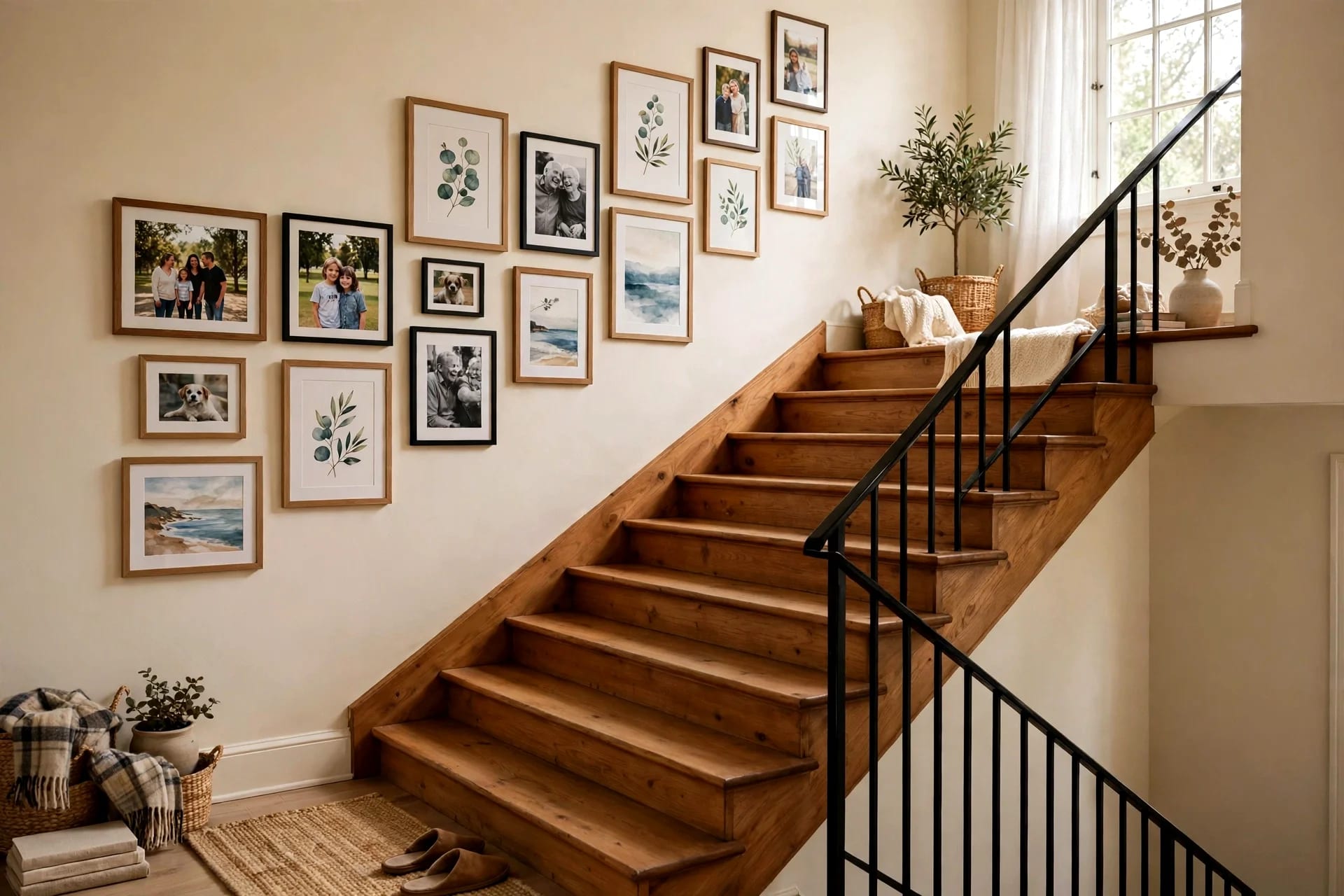
A narrow ledge mounted with heavy-duty adhesive strips becomes a rotating display: lean frames, swap art seasonally, no holes. Two large-strip sets per 60 cm of shelf is the safe ratio. This pairs beautifully with a renter-friendly gallery wall approach — the ledge is the gallery, and you rearrange without touching the wall.
Tension rods (light textiles only)
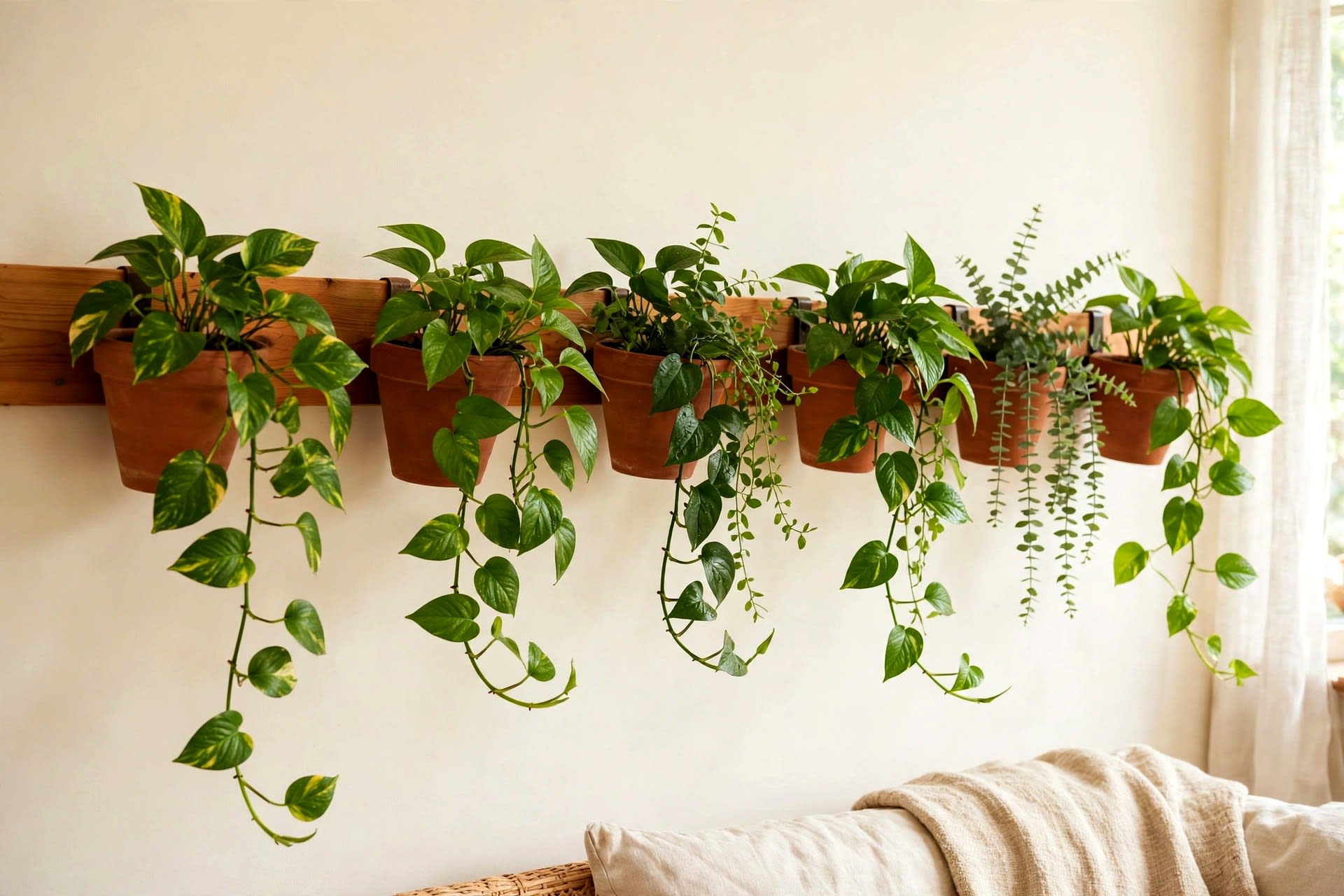
Inside a window frame or closet opening, a tension rod holds curtains, tapestries, or hanging planters with zero contact damage. Limited to openings with two opposing surfaces — but inside those, it's the simplest method here.
Washi tape and poster putty (under 0.5 kg)
For unframed prints, photos, and kids' art: washi tape grids and removable poster putty. Putty stains some paints over months — rotate it every few months and don't use it on flat/matte paint, which marks easiest.
Adhesive strips and hooks: the full technique
This is the section that determines whether your art stays up for three years or three days. Follow it exactly.
Step 1: Clean with rubbing alcohol. Wipe the wall spot with isopropyl alcohol on a cloth and let it dry 5 minutes. Walls look clean but carry a film of dust, cooking grease, and hand oils — adhesive bonds to the film, the film peels off, down comes your frame. Skip household cleaners; many leave residue.
Step 2: Check the paint age. If the wall was painted less than 30 days ago, stop. Fresh paint hasn't fully cured and the adhesive will bond to the paint film stronger than the paint bonds to the wall — removal takes paint with it. This is the single most common cause of "but it was supposed to be removable!"
Step 3: Warm the strips. Room temperature or slightly warm. In cold rooms, warm the strip between your palms for 30 seconds — cold adhesive doesn't flow into the wall's micro-texture.
Step 4: Press hard for 30 seconds. Apply the wall-side strip, press firmly for a full 30 seconds (count it — everyone undercounts). Then attach the frame-side, press the frame to the wall for another 30 seconds.

Step 5: Wait one hour before loading. Slide the frame off its strips (the interlocking kind separates), let the wall-side adhesive cure for 60 minutes, then reattach. Hanging weight immediately is the #2 failure cause. An hour of patience buys years of hold.
Step 6: Respect the rating. A 7 kg-rated set holding a 6.5 kg mirror in a steamy bathroom is a failure waiting to happen — heat and humidity degrade adhesive over time. In bathrooms, derate by half and check quarterly.
No-adhesive options that need zero wall contact
Sometimes the answer is furniture, not fasteners:
- Floor-leaned statement pieces: one oversized frame on the floor transforms a room more than six small hung ones. Anchor the top with museum putty.
- Easel display: a $25–$40 tabletop or floor easel turns any canvas into deliberate decor — great for rotating seasonal art.
- Over-the-door hooks: for wreaths and hangings on doors — zero wall involvement.
- Freestanding screens and room dividers: hang lightweight art on a folding screen with S-hooks. Movable gallery wall.
- Bookshelf styling: lean small frames on shelves between books — the styling trick from every home magazine, zero fasteners.
These pair well with bigger surface changes: if you want maximum impact without holes, combine leaned art with a removable wallpaper accent wall — the wall gets the drama, the art needs no fasteners.
Weight limits cheat sheet
| Method | Realistic max | Best for | |---|---|---| | Small adhesive strip set | ~1.8 kg | Frames to 20×25 cm | | Large adhesive strip set | ~7 kg | Frames to 60×90 cm | | Adhesive hook (large) | ~3.5 kg | Mirrors, hangings with wire | | Leaning on floor/shelf | Unlimited | Oversized art, large mirrors | | Adhesive-mounted ledge | 3–5 kg per shelf | Rotating small frames | | Tension rod | 2–4 kg | Curtains, tapestries | | Washi tape / putty | Under 0.5 kg | Unframed prints, photos |
When in doubt, go one size up on the strip and derate in bathrooms and kitchens (heat + humidity + grease).
Removal without damage
Removal is where damage actually happens — not from the product, from the technique.
- Slide the frame off its interlocking strips first (for strip-mounted pieces). Never pull the whole assembly off the wall at once.
- Pull the tab straight DOWN, slowly, keeping it flat against the wall. The adhesive is designed to stretch and release — stretching is the mechanism. This takes 15–30 seconds per strip. Rushing it is what peels paint.
- Never pull outward (away from the wall). Outward force is peel force, and peel force takes paint.
- For stubborn strips: warm with a hair dryer on low for 30 seconds, then continue the slow downward stretch. Heat softens the adhesive.
- Residue: roll off any leftover adhesive with your finger or a fresh strip pressed onto it. Rubbing alcohol on a cloth handles the last film.
Done right, the wall looks untouched. Done rushed, you're spackling — which defeats the entire purpose.
5 mistakes that cause damage anyway
- Hanging on fresh paint. Under 30 days old = the paint peels, not the strip. Ask your landlord when it was last painted, or test in a hidden spot first.
- Exceeding the weight rating. "It's probably fine" is how frames fall. Weigh the frame on a bathroom scale if you're unsure — most people underestimate by 30–50%.
- Textured walls. Knockdown, orange-peel, and brick give adhesive almost no contact area. Strips are for smooth surfaces only — use leaning or freestanding options on texture.
- Skipping the cure hour. The adhesive needs 60 minutes to build full bond. Hanging immediately cuts holding power roughly in half.
- Leaving strips up for years in heat. Adhesive hardens over time, especially near radiators and in sunny windows. In hot spots, replace strips yearly — old adhesive removes harder than fresh.
Frequently asked questions
Will adhesive strips damage my paint when removed? Not if the paint is fully cured (30+ days old), the wall is smooth, and you remove by stretching the tab slowly straight down. Damage happens from rushing removal, fresh paint, or flat/matte paint finishes, which are the most delicate — test behind furniture first.
How much weight can damage-free methods really hold? Large interlocking strip sets hold up to ~7 kg per set on smooth painted drywall — enough for most framed art. For anything heavier, lean it: floor-leaned art has no weight limit and no wall contact at all.
Can I hang a mirror without drilling? Yes, with caveats. Small to medium mirrors (under 7 kg) work on large adhesive strips or hooks. Heavy mirrors should be floor-leaned — a leaning full-length mirror is a classic styling move anyway. Never adhesive-mount a heavy mirror above a bed or sofa.
Do adhesive strips work in bathrooms? They work but degrade faster — derate the weight limit by half, use the water-resistant product lines, and avoid placement inside the direct shower splash zone. Check them every few months.
What about brick or concrete walls? Adhesive strips won't bond reliably to rough masonry. Your damage-free options are leaning large pieces, freestanding easels or screens, and tension rods in openings. Some masonry-specific adhesive hooks exist but test carefully — removal from porous surfaces is unpredictable.
Can I hang things on a removable wallpaper accent wall? Light items only, and expect the wallpaper to come with the strip on removal. Better: plan the wall as a finished surface and lean art against it, or hang heavier pieces on adjacent painted walls. The wallpaper is the decor there — it doesn't need much competition.